

Over 30 years of anarchist writing from Ireland listed under hundreds of topics
In Spain there was an old saying to describe the inequity of that society; "some people eat but do not work and most people work but do not eat." It appears that this is the new type of society that the present Government wish to implement in Ireland.
The 'anti-globalisation' movement has sometimes been characterised as 'One No, many Yesses', meaning that while everyone disagrees with the way things are now they all have different ideas on what they would like to see replace the present state of affairs as well as on the tactics needed to get there. The World Social Forum, and the spread of social forums around the world, in some respects is a reaction to this. One of the ideas of this concept is to allow a space for dialogue for the different actors (trades unions, Non Government Organisation's, social movements etc) to try to hammer out some common ideas on how to reach the future society. However, the process has not been unproblematic and has led to controversies and to accusations that the structure and functioning of these bodies are undemocratic and unrepresentative of 'the new movement'.
In Workers Solidarity, No 76 August 2003, we published an article under the title "Iraq war aftermath: slaughtering democracy" by Chekov Feeney. We received a reply to this from R. Knife, an (Iraqi) Kurd living in Ireland. Unfortunately it is to long too print in full in the printed version of the paper but you can read the full text below. We also print a response from Chekov. [WSM material on the Iraq War]
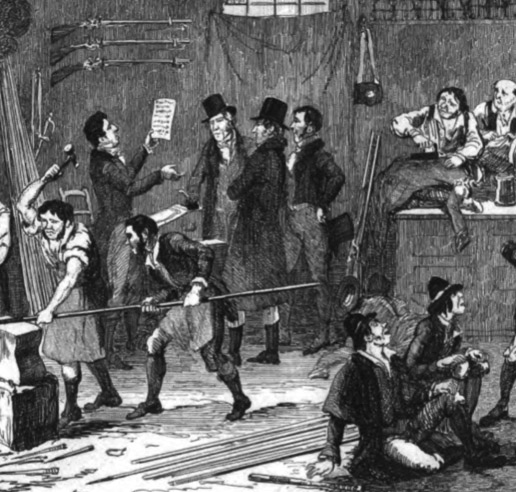 The 1803 rebellion came to be associated with one man, Robert Emmet because that suited both the government of that time and later day nationalists in search of a romantic nationalist interpretation of the rebellion. As with the great rebellion of 1798, the process of burying the radical ideas of the rebellion was bound up in creating mystical notions of blood sacrifice and individual heroism.
The bi-centennary of the 1798 rebellion saw the radical ideas that lay at the roots of it being recovered. Instead of a romantic nationalist rising for the four green fields and the faith of our fathers it was put in the context of the wave of European / Atlantic radicalism that demanded equality for all. The United Irishmen were revealed not as narrow nationalists but as part of an international democratic upsurge against monarchy and colonialism that transformed the world we live in.
During the year a spate of reports have 'discovered' what a lot of workers already know - that equal pay for equal work just doesn't exist. Although legal victories and a raft of employment equality legislation have made some dents, the fact remains that discrimination on the grounds of gender, ethnicity and age (to name just a few) persists and is widespread. It seems obvious to ask: why?
The second intifada began in September 2000 and since then over 2,500* Palestinians have been killed and 41,000 have been wounded. These stark figures alone do not tell the full story of the subjugation and the brutal oppression of the people of Palestine. The Israeli occupation forces have engaged in the systematic destruction of the infrastructure of the Occupied Territories. They regularly carry out punitive raids using explosives and bulldozers that result in residential areas being reduced to a lunar landscape of rubble.
The last months in Dublin have seen the jailing of ordinary working class people for protesting against the bin tax. A tax whose introduction was not only opposed by most people but which tens of thousands are refusing to pay. In the spring of this year more then five people were held in jail for periods because they had protested against the US military using Shannon airport to refuel en route to the Iraq war. Opinion polls at the time showed the vast majority of people opposed this war and this refuelling.
 Across the globe millions of people mobilised against the war in Iraq. On February 15th 100,000 people marched through the streets of Dublin in the biggest political protest in Southern Ireland for over 20 years. Around 15,000 demonstrated in Belfast on the same day.
The turnout on these demonstrations showed that the battle for public opinion had been won. Massive numbers of people opposed Bush and Blair's drive to war and the Irish government's role in it. But they seem to have had very little effect on the war. The governments concerned simply ignored them. In every country the anti-war movement was thus faced with the question of what to do next. After February 15th we should have expected to see the various movements internationally working on ways to stop the war despite the fact that their respective governments were ignoring them.
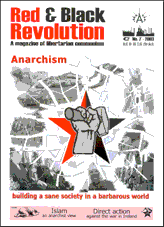 Articles in this issue include a debate on the Black Bloc, a look at the failings of the Irish Anti war Movement and a piece which explores the anarchist contention that socialism cannot come without freedom
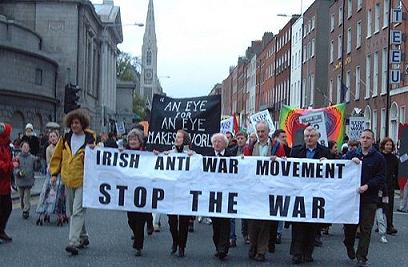
After months of regularly attending the Irish Anti-War Movement's marches and particularly after months of listening to the speeches of the leading lights of the IAWM my head is buzzing with cant and rhetoric and I have that dejected feeling you get when you know you have just lost a chance that won't be coming around again for a long time.