

Over 30 years of anarchist writing from Ireland listed under hundreds of topics
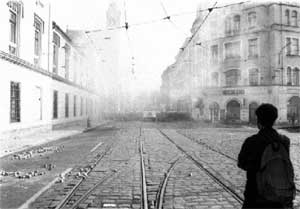 In recent years anarchism has had a re-emergence in the popular consciousness. For many people what was a piece of social history, a slogan used by cartoon terrorists or a word associated with punk rock is now a form of political struggle no matter how hazily understood. One of the reasons for this has been the role anarchists have played in the anti-globalisation movements and especially in the large anti-globalisation demonstrations in the recent years.Despite the very real problems associated with the idea of 'summit hopping' and spectacular protest these manifestations have provided a public face of anarchism and at least as importantly have given anarchists an opportunity to work together and with likeminded groups in relatively large numbers. The impact of these demonstrations has been global, showing many that despite the end of the Cold War and the subsequent much heralded 'end of history' that there is resistance to the neo-liberal project and that social struggle has not gone away. The rise in radical activity in Ireland, amongst other places, shows that events in far off lands can also influence and promote resistance at home.
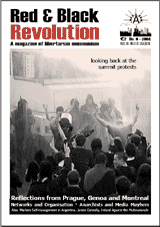 Issue 8 of the Irish anarchist magazine Red & Black Revolution looks at the summit protest movement from a number of angles as well as the revolt in Argentina and the ideas of the revolutionary syndicalist and Irish nationalist James Connolly. It was published in the Winter of 2004.
For anarchists the starting point about any discussion on organisation is our end-goal; a free egalitarian and self-managed society. Because we see means and ends as intrinsically linked, we try to foster as much of that end-goal in the here and now as possible. That means creating organisations that are run directly by those participating and that everyone has an equal say in how things are done.
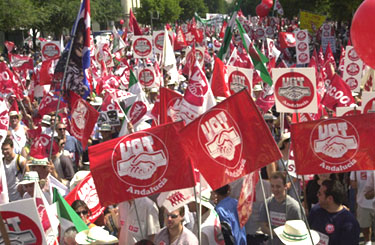 It is certainly hard to avoid the conclusion that anti-globalisation protests that avoid direct action will kill off the movement, or at least greatly reduce participation in it.
Debate on the effectiveness of the Black Bloc tactic could well go on forever. At the end of the day, in relation to the question of why its effectiveness has waned somewhat, it is probably true to say that both the original article by Ray Cunningham and the article in this magazine by Severino have some of the answers.
ICTU general secretary David Begg condemned the anti-bin tax campaign. He did this at the same time that the state was jailing protesters and refusing to collect rubbish from thousands of households in Dublin.
One in eight people in prison in the 26 counties left school at age 12 or younger. Less than 17% stayed in school until age 17 or older. According to the Prison Adult Literacy Survey released in September, 52% of prisoners are functionally illiterate. Yet the government prefers the option of jailings rather than putting the necessary resources into the schools - which would doubtlessly reduce the incidence of petty and anti-social crime.
Just three years ago 7 people were jailed in Cork city as part of the campaign against the first attempt at non -collection. HASC members then brought their refuse to the City Hall when it was left uncollection. Fines led to imprisonment. The campaign succeeded with the corporation backing down. A few weeks later the High Court ruled that the council had to collect under the Health Acts, these were subsequently amended by the government to allow for non- collection. The first to suffer from this were in Dublin, but the plan was afoot for the rest of the country. Threatening letters have gone out in Cork city to all households. November 17th is the designated day for the beginning of non-collection in Cork and forces are being gathered for the showdown. The key issue now is to organise as many areas as possible, get people aware of the alternatives to Corporation collection and organise tactics to put the council on the defensive.
A passion for freedom, opposition to all forms of hierarchy and the advocacy and use of direct action have historically been some of the most important and enduring characteristics of anarchist politics. The recent publication by the Kate Sharpley Library, of two pamphlets provides us with a glimpse of how these ideas and practices have evolved over time.
September in Chile is the month of protests. It is the month where in protests and angry demonstrations throughout the country Chileans commemorate September 11th 1973, the day of Pinochets bloody (US facilitated) coup. Throughout Pinochets reign of terror September the 11th was marked by protests which were systematically and viciously repressed by the police. Although in 1990 Pinochet was forced to leave, the tradition of the September 11th protests has continued every year. This is because, despite the dictator's departure, little has in fact changed fundamentally in Chile.
The campaign against the bin-tax in Dublin has seen an upsurge of community resistance to the government. The mainstream media is usually hostile to the campaign and doesn't bother reporting many actions. Below is a summary of activity in two areas, activity which is being replicated right across the city.