

Over 30 years of anarchist writing from Ireland listed under hundreds of topics
Colombia is the most dangerous country in the world to be a trade unionist with intimidation and murders being committed almost daily. Coca Cola is currently being sued by the Colombian food and drinks union Sinaltrainal for its (alleged) use of right wing paramilitary death squads at its plants in Colombia. The company has denied the allegations and predictably claims that it has no responsibility for the actions of the bottling plants.
Twenty years ago (in 1983) the Government put an extra 1% on workers' PRSI. This was to pay for local services, after they abolished domestic rates. Under the agreement reached in 1983, the councils were to be allocated money from this extra 1% contribution. But you just can't trust our rulers. Last year, for example, Dun Laoghaire/Rathdown County Council only got 48% of the money owed to them under this agreement. According to the latest figures less than 8% of waste comes from our homes. Most waste dumped in landfills is not domestic rubbish, but rather commercial, construction and agricultural waste.
It is a testimony to this campaign that the government has changed the law of the land in their latest attempt to defeat it. The authorities, from the bean counters at City Hall to government level, have been twisting and squirming as they look for yet another way to make us pay this double tax. Initially they tried taking us to court. That hasn't worked and logistically it proved to be a nightmare for them. In Cork they tried not collecting rubbish from non-payers, and even jailed some campaigners for dumping rubbish outside City Hall.
Facing the Enemy kicks into gear with a look at Bakunin's ideas on the necessity of anarchist organisation and thereafter studies individualist anarchism, syndicalism, the Organisational Platform of Russian exiles, a quick chapter on the Spanish movement and a somewhat bizarrely detailed account of post war French anarchism. Also, included are almost one hundred pages of original documentation mostly relating to the Organisational Platform.
While most people understand the word democracy to mean that the people hold power, there is another meaning. According to the second meaning of the word, democracy means that the super-rich make all of the decisions while the people's job is to do what they're told, and to put a piece of paper in a box every few years. This 'democracy' is extremely hostile to any notions of popular involvement in politics. The US/UK war against Iraq, trumpeted as a war for 'democracy', illustrates what this 'democracy' means in practice.
Imperialism is one of those words that often seems to be little more than an effective way of making people stop listening to you. However, despite the frequency with which it is thrown around by left wing groups, with little or no explanation of the ideas behind it, it does have real meaning and is something that we can all recognise in the world around us - especially in this age of US wars against third world regimes.
There is nothing wrong or "inefficient" in subsiding public transport. It's a lot cheaper to provide regular, dependable and affordable (or free!) buses and trains than to have even more car usage. More cars on the road means more road building, more road repairs, more traffic jams and more air pollution.
= more profits for the bosses
= traffic jams, pollution and crap service for travellers
= worse pay and conditions for workers
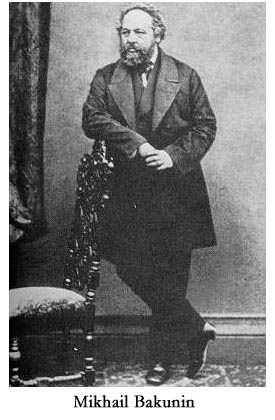 Freedom without Socialism is privilege and injustice...Socialism without freedom is slavery and brutality
Anarchists also seek to create communism. But for us freedom plays a central role, not only in the future society, but in how we try to get there. That is why, when we talk of communism, we talk of libertarian communism
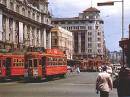 Within hours of the start of the Spanish revolution workers had seized control of 3000 enterprises. This included all public transportation services, shipping, electric and power companies, gas and water works, engineering and automobile assembly plants, mines, cement works, textile mills and paper factories, electrical and chemical concerns, glass bottle factories and perfumeries, food processing plants and breweries. (Image: Public transport was one of the first industries to be collectivised)