

Over 30 years of anarchist writing from Ireland listed under hundreds of topics
Saturday, November 19th, 2005. 2pm at the Mansion House, Dason Street. The Open public meeting will start at 2pm on Saturday 19th November at the Mansion House where the first Dail commenced. The meeting is being chaired by Frank McBrearty, Jnr. It has been organised by the people who were at the Donegal meeting, which was a huge success and where over 500 people turned up to vent their anger and frustration at the level of corruption in this country. The Donegal meeting highlighted the need for an Independent Garda Ombudsman. Justice Ireland is going to highlight the need for an Independent Garda Ombudsman in every large town and city across the country in meetings similar to Donegal and Dublin.
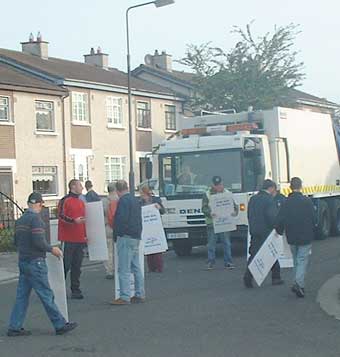
SIPTU has organised a rally in support of the strikers at Doyle Concrete/Steelite in Rathangan, Co Kildare. Sunday, November 20th at 2pm in Rathangan.
A Talk by Ramor Ryan
Tuesday
15th of Nov.
Rm 4050a
7pm
Trinity Arts Block

Compared to many other European countries May Day demonstrations have always been small in Ireland, even in the 1980's when the Stalinist left was much more influential and the unions were much more powerful. By the mid-1990's, with the old left in complete disarray and the union bureaucrats more focussed on partnership with the state and the bosses rather than workers' rights, May Day had become a fairly underwhelming event.
So, given this dismal tradition why were the explicitly libertarian May Day events in 2004, comparatively speaking, such a success? Of course there was the impetus of a major European Union summit but to understand why anarchists were in a position to organise big May Day events calls for a brief examination of the development of libertarian ideas and practices in Ireland over the past few years.
A look at some of the problems faced and mistakes made in the organisation of the Dublin EU Mayday summit protests in 2004.
The experience of May Day brings up us back to some of the perennial questions thrown up by counter-summits protests: how do we broaden our movement and what role do direct action and confrontational tactics have in that process. These are, of course, the issues that have been mainstay of Red and Black Revolution debates over the past few years but have been usually viewed through the prism of events outside of Ireland. The following article is a personal account of the Dublin Grassroots Network's approach to such issues in relation to May Day and goes on to argue for increased tactical flexibility from anarchists within the anti-capitalist movement.
These are articles on Community Struggles that were published on our old web site prior to 2006 and which may not be on this new site yet. It does not include articles published from 2006 on - to see these click on Community under categories in the left hand box.
 In many countries there has been a debate as to the nature of the changes in western workplaces; in Britain they talk about increased casualisation of the workforce, in the US they talk about contingent labour and on the European continent they use the language of precarity. Central to in all these debates is the issue of job insecurity.
A number of issues are being discussed. Firstly has the workplace changed fundamentally such that people increasingly are in temporary work rather than permanent work? Secondly is the division between work time and non-work time dissolving, are we spending more of our lives 'in work'? Thirdly are the non-work aspects of life becoming increasingly insecure?
Anarchists, in common with all radical proponents of social change are continually asked what their vision of a new society/economy is. What is the "Master Plan", the "Blueprint" that will be followed? We are justifiably wary of outlining any "Blueprint" for an anarchist society that would suggest that it is THE solution and should be followed to the letter - who would enforce this great master plan after all!?