

Over 30 years of anarchist writing from Ireland listed under hundreds of topics
Barcelona, May 1937. The first issue of 'The People's Friend', the organ of the Friends of Durruti, appeared. The police repression of the Republican state had just crashed against the fighters of the barricades who had responded to the stalinist provocations by retaking the road of revolution. But while the combattants of the revolution were taking the fight to the forces of repression of the Catalan Generalitat and of the central state, the anarchist 'leaders' of the CNT-FAI, having become ministers of the bourgeois government, asked the victors of the barricades to lay down their arms, to have faith in their 'leaders' to settle the conflict and to reunite the anti-Franco forces.
 The cracks beneath the surface in the peace process were once again exposed on the streets of East Belfast last night in the second night of serious sectarian rioting. A UVF led mob numbering in the 100's has been engaged in attacks on catholic homes at the edge of the Short Strand. This is the reality of a peace dividend which has failed to deliver to working-class communities and stands in stark contrast to suburbia only 5 miles away which produced golf champion Rory McElroy.
Collectively agreed perspectives of the WSM as set by National Conference. Updated Feb 2013.
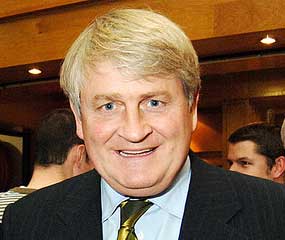 Just 12 weeks after the Moriarty Tribunal found that he made corrupt payments to Michael Lowry TD in order to influence the granting of a mobile phone licence, Denis O’Brien has shown that for Ireland’s elite the good times still roll. Digicel, the mobile phone company wholly owned by O’Brien, has announced that its net profit for the year ending March 2011 increased by €120million. In keeping with the true lack of transparency so beloved by our super-wealthy however, Digicel refused to divulge the actual net profit figure. What was announced was that O’Brien’s own personal income from Digicel last year was €28million, plus of course whatever income he has from his various other companies and investments.
This position paper was modified October 2014 - read the current version at http://www.wsm.ie/c/wsm-membership-engagement-policy
This position paper outlines the two forms of WSM membership and how we engage with people interested in the WSM
In the 1930's Europe was experiencing one of its' worst ever slumps. The Wall Street crash came in 1929 and its repercussions were felt far and wide. Spain was no exceptionBy 1936 unemployment had gone over 30% in many of the towns and cities Out of a total workforce of three million, one million were out of work. There was no dole and as prices rose by 80% in the five years up to 1936, many encountered severe hardship.
 José Antonio Gutiérrez Danton returned from Egypt with news of the state of the struggle for greater freedom in the post-Mubarak era to give this presentation at the 2011 Dublin anarchist bookfair.
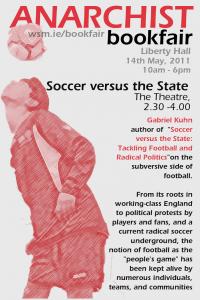 PM Press author Gabriel Kuhn gave a talk on the subversive side of football to the 2011 Dublin Anarchist Bookfair. This is the recording of that talk and the discussion that followed.
 The election of Barack Obama to the White House in 2008 was one of the most celebrated electoral victories of recent times. Not since Nelson Mandela’s win in South Africa, following the collapse of the Apartheid regime, was the supposed power of the ballot box so publicly celebrated and displayed.
Obama’s victory was hailed as a triumph for the ‘democratic process’ and was widely touted as a fine example of how people power and electioneering can trump entrenched bigotry and money.
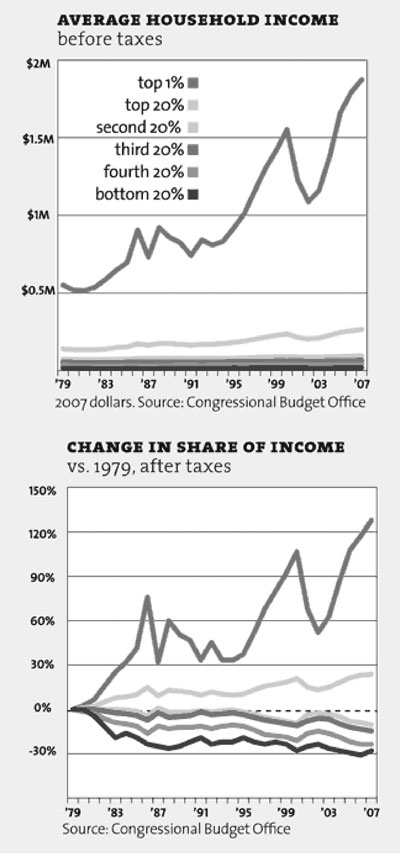 The electoral system in the United States is notoriously conservative. Two political parties, the Republicans and the Democrats, dominate. To be a Presidential hopeful, you need to have stacks of money – to pay for advertising and campaign teams and so on and so forth. Usually this means courting big business and corporate interests in return for campaign donations.
As a former senator Obama was well aware of this situation and how things worked. Ultimately, however, his success lay in the fact that he mobilised in two distinct constituencies - among the business community but also amongst the grassroots voters. This latter aspect – his grassroots mobilisation - received considerable prominence because it was ‘news’ and noteworthy. His clear and unambiguous business friendly comments received less attention, but were nonetheless important.
