

Over 30 years of anarchist writing from Ireland listed under hundreds of topics
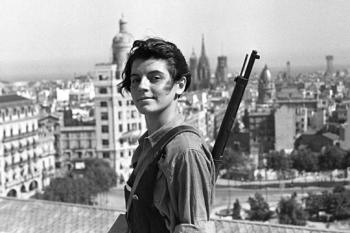
Today a social revolution that took place seventy years ago is remembered by libertarian socialists as an example of how our ideas can work. The Spanish revolution came closer to realising the possibilities of a free stateless society on a huge scale than any other revolution in history. (Image: Anarchist Milita woman during the revolution)
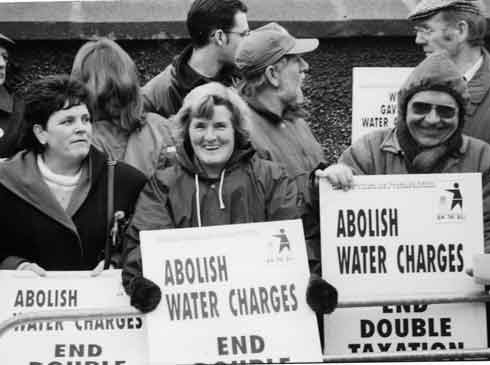
This text looks at the successful fight against water charges in Dublin a decade ago (the author was Secretary of the Federation of Dublin Anti Water Charge Campaigns) and asks what lessons campaigners preparing to fight water charges in the North can take from that campaign. (Image: The strength of the campaign: working people)
I wonder am I alone in thinking, when presented with a collective picture of career politicians smiling on the steps of the Dail, that the elected members of that house might have difficulty finding their arse with both hands. It is little wonder that the grinning gombeens are smiling like a cats after a bowl of cream. The facts around what our politicians get paid and what they do for that money is a reason for them to grin and us to grimace.
Imperialism, in its most basic form involves wealthy and powerful governments using their military power to invade poorer parts of the world in order to impose their control upon them. There isn’t the space to go into all aspects of imperialism here, so I’m concentrating on the military form.
Slaving your life away just so you can make ends meet; having no say in the major decisions that affect your life; criminal politicians and businessmen plundering the country. Try to do something about it and they’ll lock you up. Yes, thats capitalism!
Anyone who remembers their Leaving Cert history will know about the Spanish Civil War which was sparked off in July 1936 with an attempted military coup against the liberal / left wing government of the day. What you might not be aware of is the ‘Spanish Revolution’ – the activities and massive change which occurred in the parts of the country which were not controlled by the fascists.
The Afghan hunger strike brought into sharp focus the new Ireland into which our country has been transforming over the last 10 years. Our booming economy and relatively high wage levels have drawn many thousands of immigrants into the country in search of a better life here. Much as the Irish once looked to America for the promise of a happier future, so many people from less well off countries now look to Ireland.
‘The Liberties’ gets its name from a number of areas which were outside the medieval walls of Dublin City. This doesn’t mean that they were somehow free - it just means that instead of being under the city’s jurisdiction they were ruled by a different group of masters. The Archbishop of Dublin was the boss of one section, the Earl of Meath was in charge of another, and so on. These men of wealth and power taxed the areas they controlled and made money from them but didn’t really care about anyone who lived there.
Over the past fifteen years those in power made a lot of promises. They promised a country in which everybody would benefit from the economy, one in which poverty and other problems would be left behind. As usual they lied.
An outline of the main features of the politics of Energy Resources with a focus on the important issue of Peak Oil.
