

Over 30 years of anarchist writing from Ireland listed under hundreds of topics
A current crisis - Today we live in a media-saturated society that sensationalises crime and gangland warfare in working-class communities. Some say the media through its various functions has become a sort of moral barometer for the national imagination in terms of how the working classes are perceived. This, perhaps, is done through newspapers' slash headlines like “Thugs never had it so good” or “Bugsy Malone gang terrorise North Dublin”, or through current TV shows that give a picture of working-class people as rough and disrespectable such as Jerry Springer or The Royle Family. All this actively contributes to the respresentation of the working classes as disresputable.
There is something mystifying about the police force in the Republic of Ireland. A force born out of a bloody civil war yet strangely absent from popular memories of those long years of violence. A force celebrated for its rootedness in Irish cultural practices yet operating in the same centralised, colonial model inherited from the Royal Irish Constabulary, the police force of British state.
It really does not take a lot of effort to come across anecdotal evidence of insensitive and sometimes brutal policing in working class areas in Ireland. As residents, community workers and educators in a wide variety of settings we have both personally experienced Garda violence and have heard countless negative stories about the gardaí. These stories cover a wide range of issues. Most consistently people, usually but not exclusively young men, complain of insults, intimidation on the street and of physical violence during arrest and in custody. The violence they describe is of varying degrees of seriousness and routinely involves minor assault (e.g. slaps, kidney punches and limb twisting etc) but more serious violence can and does occur (1).
The is the readers comments page for the Make Policing History texts. We want to hear what your experiences are or what your comments on the text are.
If you have not yet read the Make Policing History text click on this link.
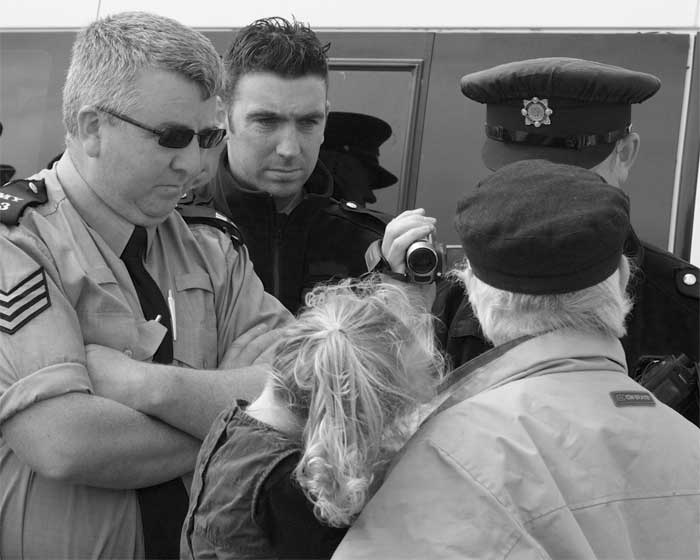
Shell to Sea campaigner Naoise Ó Mongáin asking Garda to stop videotaping his grand daughter during a protest at Shell's refinery on Saturday.
“If you don't like me, how can you like my child?”
The following is a report from the situation at the Drishane Castle direct provision centre, after successful protests by residents there this week forced a number of immediate changes there. Listen to the audio clips attached to hear directly the opinions of the residents themselves. These audio clips can be listened to individually or as one full recording.
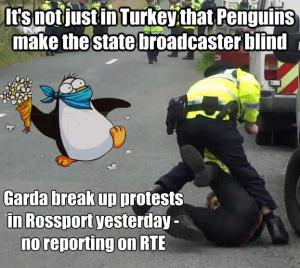 Yesterday five people were arrested by the Garda as violence was used to break up protests against the continued imposition of an experimental gas pipeline on the community by Shell. In the morning 30 Garda blocked the entrance of Rossport Solidarity Camp and then arrested 2 Shell to Sea campaigners who were trying to access the public road. During these arrests Garda behaviour was described as "very violent" by an eyewitness we talked to.
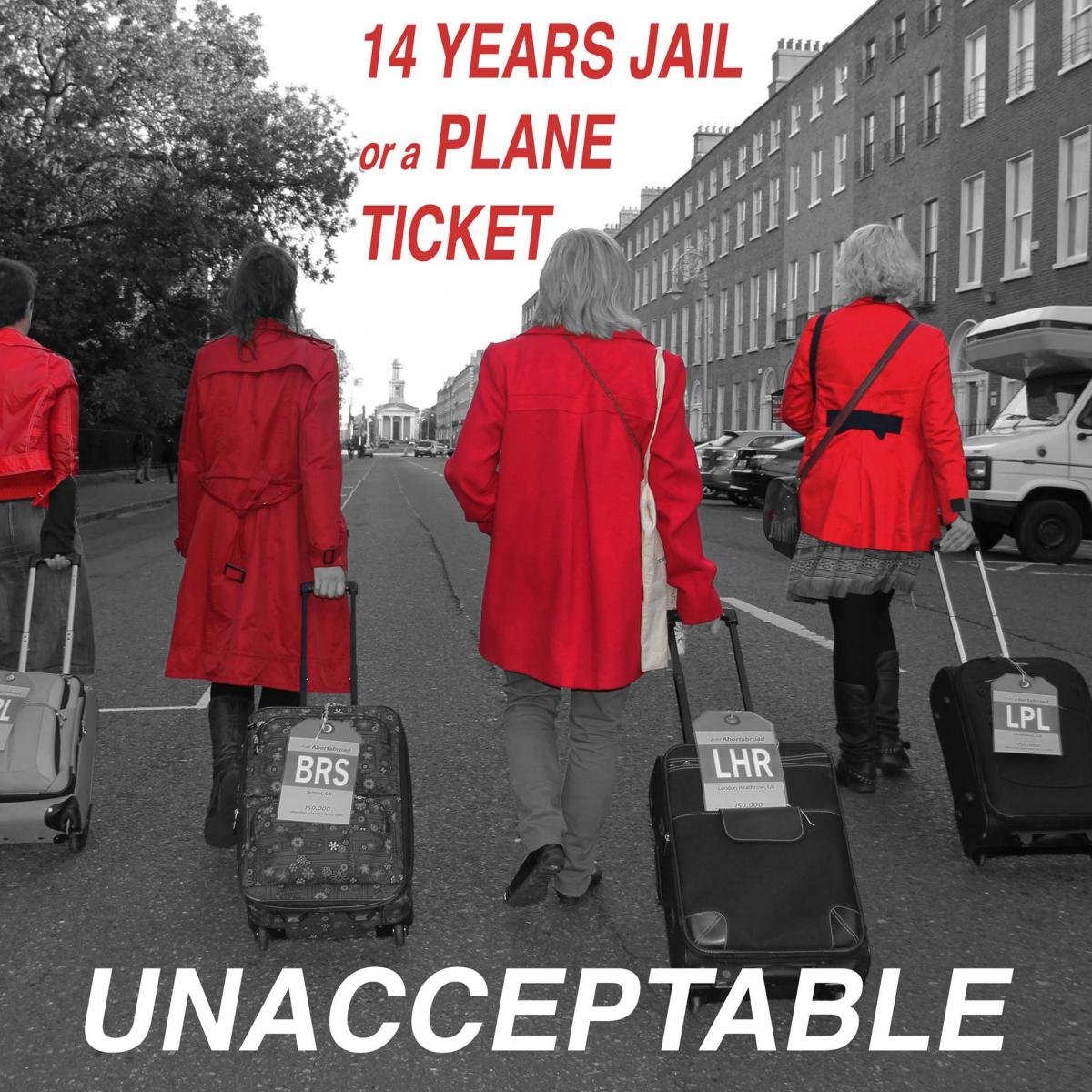
12th June saw the publication of the The Protection of Life During Pregnancy Bill 2013 on which the Dail votes this evening. In this piece of legislation, it states,
"It shall be an offence to intentionally destroy unborn human life"
"A person who is guilty of an offence under this section shall be liable on indictment to a fine or imprisonment for a term not exceeding 14 years, or both."
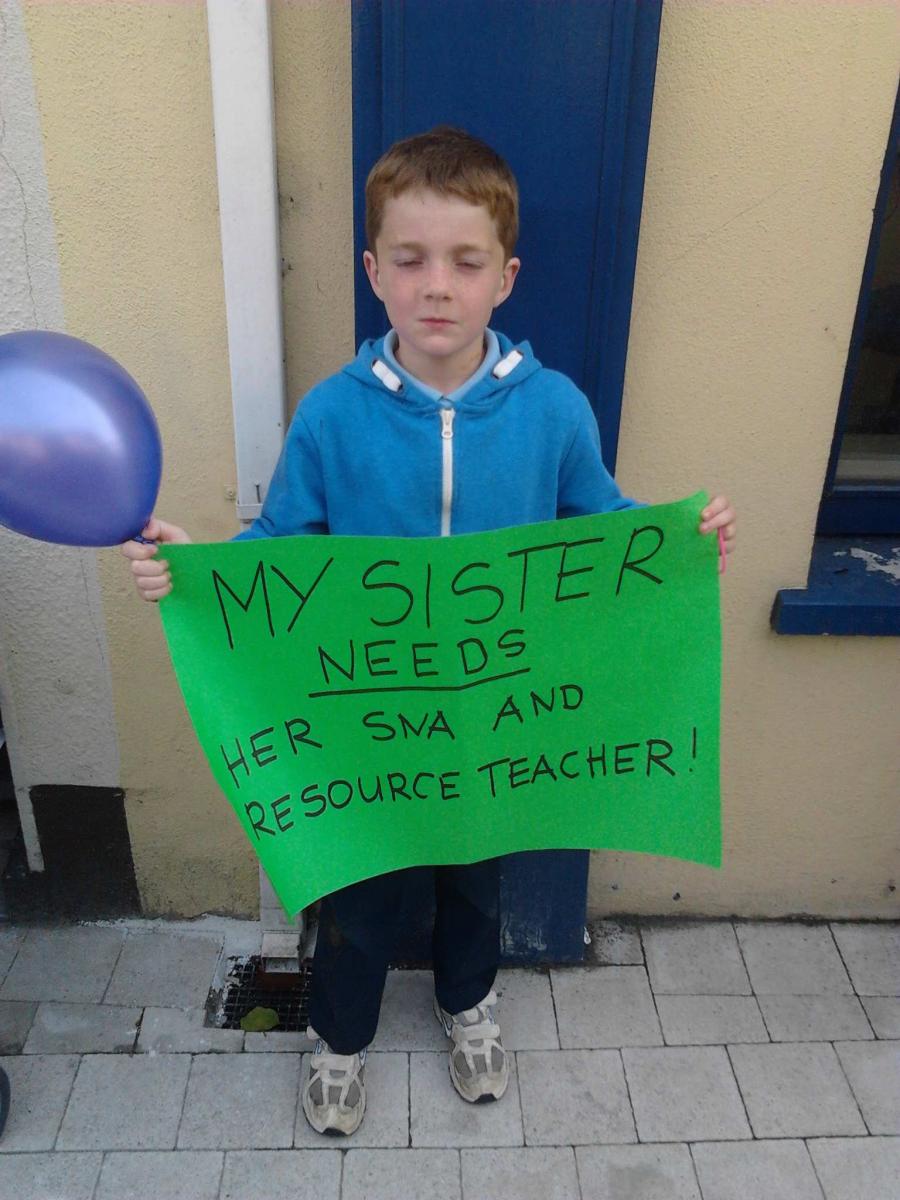 Just under 100 people, both parents and children with special needs and their supporters, took part in a vibrant protest today against cuts to SNAs (Special Needs Assistants) in Castlebar, Co. Mayo outside Taoiseach Enda Kenny's constituency office. The protest was called despite a u-turn by Minister Ruairi Quinn on recent plans to withhold 500 additional teaching posts in schools which were required to cope with the growing number of children in the education system who need support.
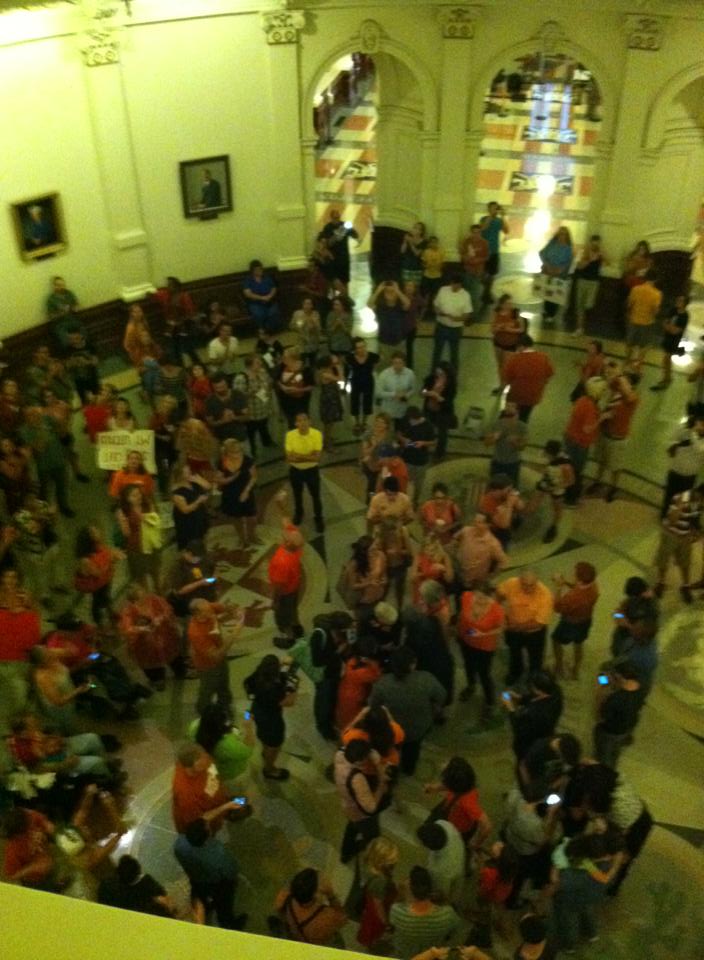 Interview with Texan Anarchist, Jen Rogue
Q. How easy is to get an abortion in Texas?
Depends on what you mean by “easy.” To begin with, there is a very conservative culture that shames and silences women about sex and opts for abstinence-only sex education, which contributes to abortion being inaccessible. Texas is almost ten times the size of Ireland and has the nation’s largest rural population, which is yet another obstacle to access, given the limited options in health care. Additionally, with a price tag of $450 to $3,000 (depending on how advanced the pregnancy is), the cost alone makes access to abortion a huge challenge.
Q. How was this law going to change the situation?
The bill would ban any and all abortions after 20 weeks. Also, it would require clinics to be certified as “ambulatory surgical centres” and their doctors to have admitting privileges at a hospital within 30 miles. This would close almost every clinic in the state, leaving only 5 out of the current 47.