

Over 30 years of anarchist writing from Ireland listed under hundreds of topics
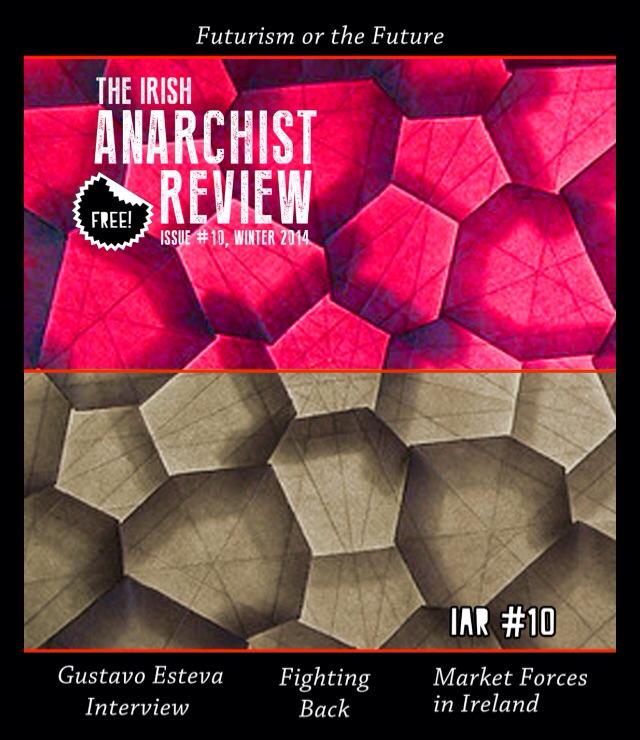
Welcome to the tenth instalment of the Irish Anarchist Review, published for the 2014 London Anarchist Bookfair.
Five years ago, the Irish Anarchist Review replaced Red and Black Revolution as the magazine of the Workers Solidarity Movement. It’s mission was to fill a vacuum in Irish radical circles, to be a publication that raised questions and provoked debate, rather than laying out blueprints for success, as had been the norm in the more theoretical work of the left. It was established at a time where a fightback was believed to be imminent, when the expectation was that as the (economic) beatings continued, morale would improve.
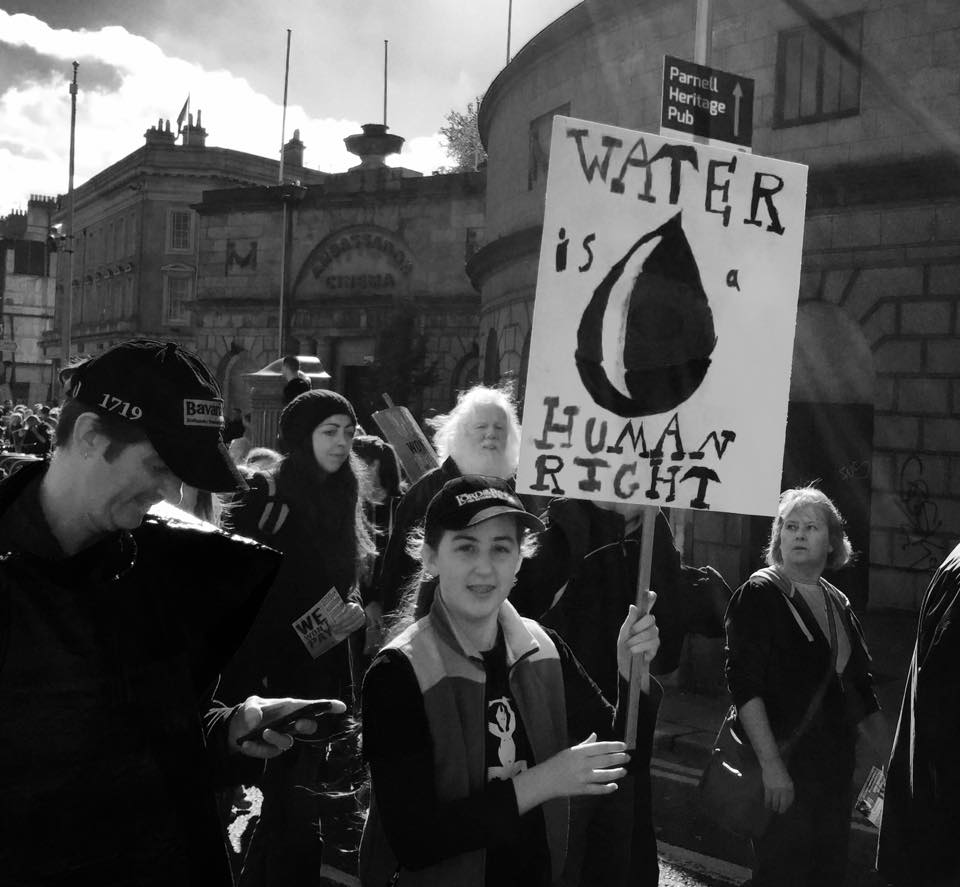 Saturday last, 11th October, saw tens of thousands take to the streets of Dublin in a powerful, colourful and vibrant display of opposition to the Irish government’s attempts to impose water charges.
The numbers who turned out were so large and took everybody by surprise to such an extent that nobody – media, gardai or organisers – could give an accurate estimate of actual numbers. Estimates varied from 30,000 to 100,000, but whatever the exact figure was it was clear that this was the start of something huge.
It was an energising and invigorating protest to be part of. From well before the start time, people were arriving in their droves at Parnell Square. To see groups of people arriving in by bus from all over the city and from around the country was inspiring and should have a huge impact on the political confidence of all those who took part.
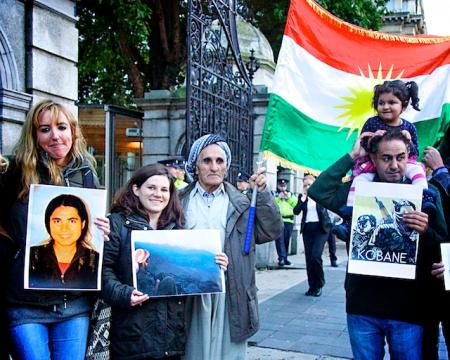 The WSM considers the struggle for Kobane and the autonomous zones of Rojava to be crucial for the development of a political alternative for the region. We view Daesh as the toxic excrescence of the results of global and regional imperialist intervention in Syria and Iraq.
This is a list of radical writings around the issues of intersectionality, privilege (theory), identity (politics), and difference.
A critique of liberal conceptions of 'intersectionality' and an outline of an anarchist, class struggle approach.
We need to understand the body not as bound to the private or to the self—the western idea of the autonomous individual—but as being linked integrally to material expressions of community and public space. In this sense there is no neat divide between the corporeal and the social; there is instead what has been called a “social flesh.” - Wendy Harcourt and Arturo Escobar1
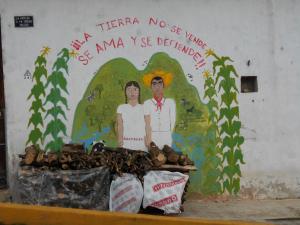 OLINTLA is a small village in the Sierra Norte, a remote, mountainous region to the east of Mexico City. The landscape there is dramatic, green and beautiful, mostly sunlit jungle, rivers and wildlife. The hillsides are occasionally populated by farming towns and villages, mainly indigenous communities whose way of life is constantly threatened. In recent years, the Mexican state has accelerated plans for the development of a vast hydroelectric power plant in the area, directly impacting the people in Olintla and about a dozen or so neighbouring communities. What appears on the surface to be a ‘green energy’ project is in fact closely bound up with community displacement and the aggressive extraction of local oil and gas reserves, primarily to the detriment of the region’s water resources and wider capacity to sustain life. Unfortunately, Olintla is far from an atypical case but represents how indigenous communities in Mexico, as in Latin America more generally, tend to bear the brunt of the state’s creation of opportunities for private capital accumulation, called ‘development’ by those in power and ‘projects of death’ by the communities affected.[1]
WSM position paper on the role of the anarchist organisation, as agreed at National Conference October 2014.
According to RTE these are the changes in the Budget. After years of making us pay for the crisis it appears that a few carefully selected crumbs are being thrown under the table to quiet us down. Predictions are that most people won't see a significant change in take-home pay. Most of the positives on social welfare and services represent the government returning a fraction of what was taken and the 'Make the Youth Emigrate' dole rates remain in place.
This position paper outlines WSM membership and how we engage with spheres of people interested in the WSM.
Modified by WSM National Conference, July 2017