

Over 30 years of anarchist writing from Ireland listed under hundreds of topics
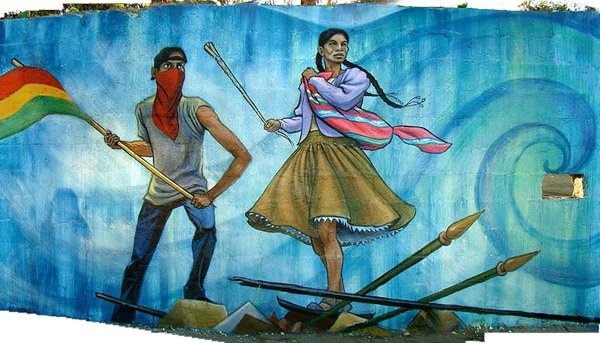
‘In the history of humankind every act of destruction meets its response, sooner or later, in an act of creation’ - Eduardo Galeano
In Bolivia, there have been remarkable experiences in urban peripheries, notably in Cochabamba, that reveal the capacity of grassroots associations to construct a free society based on solidarity and mutual aid. The background to the country’s Water War of April 2000 must be understood against preceding waves of struggle, particularly the huge marches for sovereignty and livelihoods of coca growers, Amazonian groups, and others that emerged with the implementation of the neoliberal model in 1985 [1]. Subsequent mine closures and rural migration occasioned huge increases in Bolivia’s urban centres, particularly in Cochabamba, the country’s third largest city. The state water company, Semapa, served only half of the city’s population. In the neglected southern peripheries, neighbourhood groups organised associations to bring water to their homes. Cooperatives, formed without state assistance, dug wells, built water mains, and even created drainage and sewers. In cases where wells could not be dug, the committees bought their own water tankers and organised daily deliveries. By 1990, some 140 urban water committees had formed in the south of Cochabamba, with between 300 and 1000 families in each one [1].
The Dublin anarchist bookfair panel on migration, state racism and anti-racist, migrant self organising.
Looking at issues faced by migrant activists involved in left-wing politics including the NGOization and electoralization of the migrant justice movement; confronting nationalism and white privilege within campaigns and the particular types of exploitation and oppression faced by different communities of working class migrants. Also discussing migrant self-organising, as in the Kinsale Road occupation, and strategies for making single-issue campaigns more inclusive of anti-racism organising.
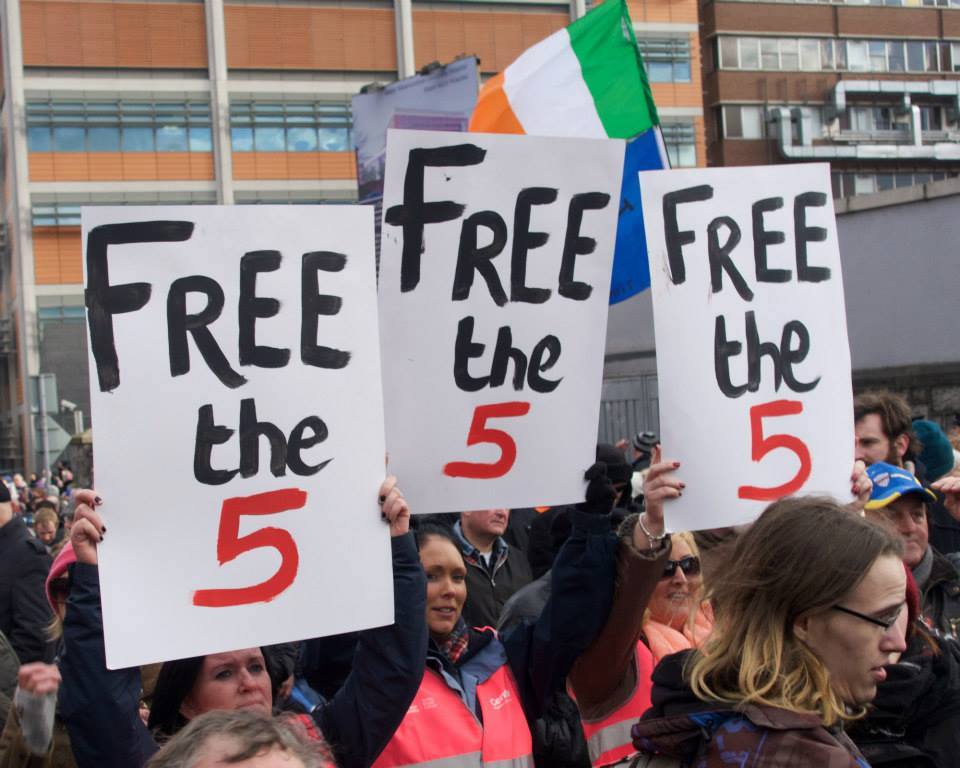 Ever wonder why the Gardaí show up in large numbers when you’re trying to stop water meters in your estate, but haven’t got the resources to come straight out when you think your neighbour’s house is being burgled? If so, you’re thinking about the state.
Misconceptions & Reality
The most common misconception about anarchism is that it is in favour of ‘chaos’ or some sort of world generally devoid of order and democratic institutions which would leave us at the mercy of predators within our society. Therefore it aims for the destruction of civilisation and democracy itself, which in this view are represented by the state – the guarantor of peace, freedom, and of course, roads.
 Congratulations to workers at McDonalds and their union, Unite in New Zealand/Aotearoa who have won their battle with the employer and ended zero hour contracts at the fast food giant!
The workers were due to strike today 1st of May, but McDonalds backed down at the last minute. From 1 October 2015, all McDonald's employees will be offered 80 per cent security of hours, up to a 32 hour weekly cap, based on the average of the previous fixed quarterly worked hours.
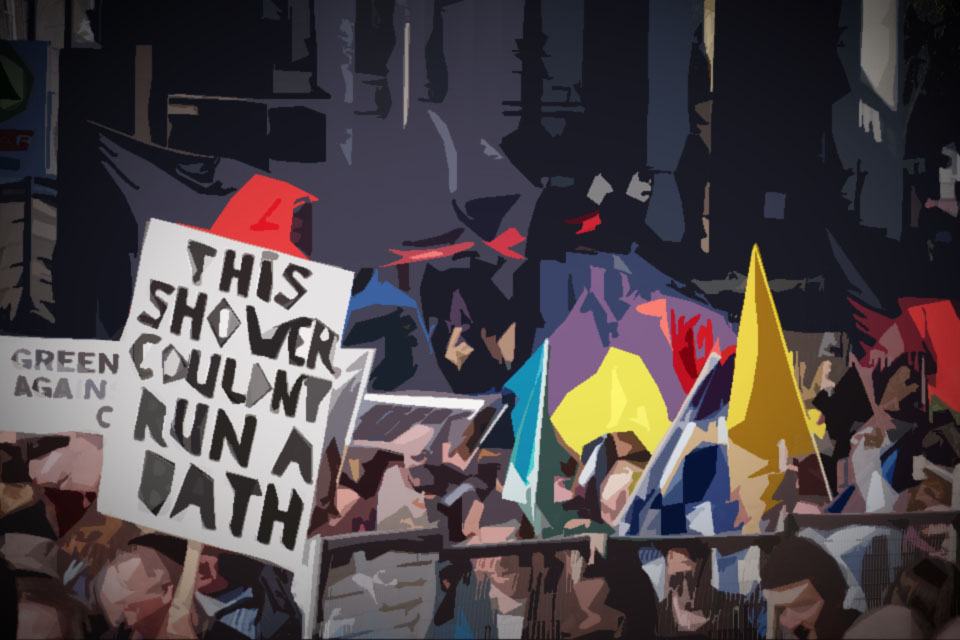 The campaign against the water charges is the most widespread and powerful grassroots movement in recent Irish history. With hundreds of local campaign groups, daily direct actions, and 4 national demonstrations on the order of 50,000-100,000, the cynical refrain that 'the Irish don't protest' has rapidly been replaced by a sense of ubiquitous rebellion. Irish Water is a depraved neoliberal world in effigy, embodying many of the worst problems of our society including the rule of international finance (and private greed in general) at the cost of the vast majority's well being, and the chronic disconnection of the populace from decision making. As such the movement has become a platform for opposition to austerity, the bank bailout, privatisation, the government, party politics, the EU, and more. Thousands of people have experienced a political (re-)awakening. But while it is possible that we will win this battle, and abolish Irish Water, this struggle represents a precious opportunity to make a grassroots offensive after so many years of being beaten down.
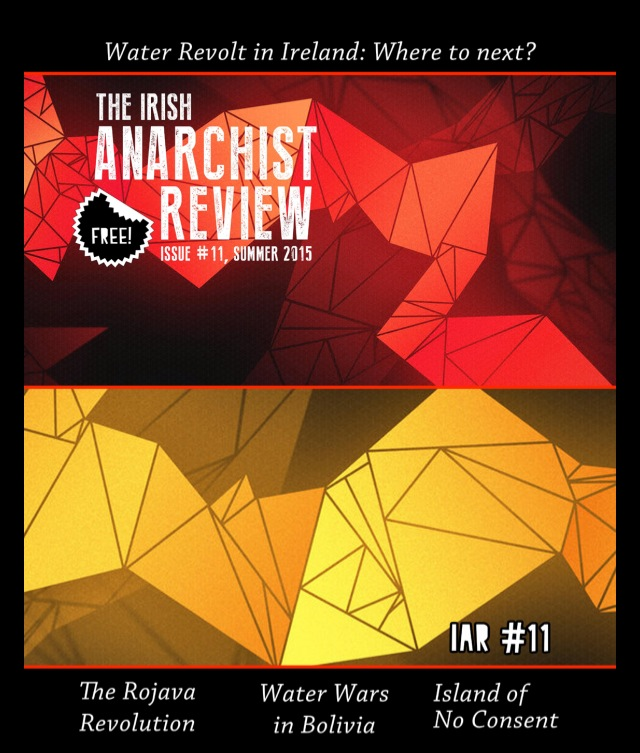 The eleventh issue of the Irish Anarchist Review goes to press in the middle of the biggest battle in the war against austerity in Ireland to date. Tens of thousands of people have taken part in mass demonstrations against the water charges, up and down the country thousands have taken part in acts of physical resistance against water meter installation and hundreds of thousands, at the very least, are getting ready to participate in a mass boycott of the charge. Furthermore, the level of political consciousness of the population has risen considerably over the last year, with a distinct anti-establishment atmosphere, and in some cases an anti-state atmosphere, developing.
“Marriage equality” represents a victory for conservatives within the LGBT movement in nrrowing and limiting the horizons of ur politics, and for conservative and homophobic social forces in diffusing and recuperating the potential for radical transformative change opened up by the gay liberation movement.
Fionnghuala is calling for a Yes vote but she also argues from an anarchist feminist perspective against the institution of marriage. It is a bourgeois, patriarchal tool which has been used to trap women, our sexualities, as well as to force reproduction and to force a woman to enter into reproductive labour.
While sharing some of my fellow anarchists criticisms' of marriage as a patriachal institution I feel unable to tolerate the existence of laws which blatantly discriminate against queer people.
Of course everyone should have unconditional access to housing food migration etc but until we reach full libertarian communism people have to make complex choices which may include wage slavery or marriage.
We never criticise the personal choices of straight comrades who have chosen to marry often for reasons involving visas, recognition of parenthood or tax.
The fights like marriage equality, which, on it's surface, seems really heteronormative, have the benefit of creating a halo effect and changing a homo/bi/transphobic culture. It makes queer people visible, it brings to light unequal treatment and starts a societal conversation that can and should be taken advantage off.