

Over 30 years of anarchist writing from Ireland listed under hundreds of topics
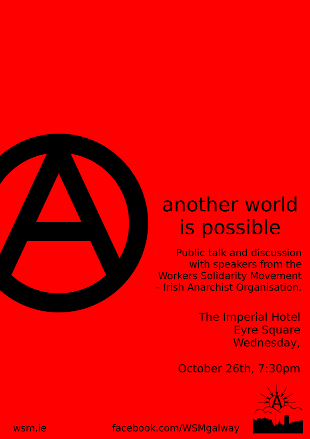 On Wednesday 26th October, the newly-formed Galway branch of the WSM will be hosting a public meeting.
Titled 'Another World Is Possible', it will feature a number of talks by WSM members which will serve as an introduction to anarchism, the history of anarchist struggles in Ireland, and local struggles, follwed by open discussion.
The meeting takes place at 7.30 pm in the Imperial Hotel on Eyre Square.
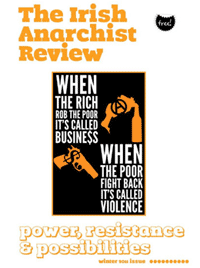 Welcome to issue 4 of the Irish Anarchist Review, produced by the Workers Solidarity Movement. This magazine aims to provide a forum for the exploration of theories, thoughts and ideas about political struggle, and where we would like to go and how to get there from the current situation. This magazine also seeks to be a place where people interested in revolutionary politics can read first-hand reports from people involved at the ‘coal-face’ of working-class struggles and perhaps reply to it with an article of their own. We believe there can be no revolution worthy of the name without a genuine sharing of political ideas between people.
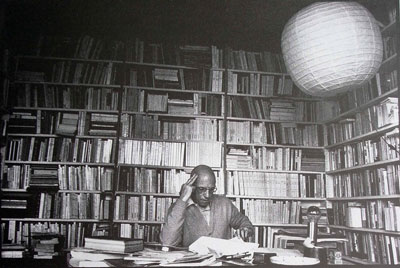 Michel Foucault is a philosopher whose politics everybody seems to have a differing opinion on. He has been called a disguised Marxist, both a secret and explicit anti-Marxist, a nihilist, a new conservative, a new liberal, a neutral interpretivist, a crypto-normativist, a principled anarchist as well as a dangerous left-wing one, and even a Gaullist technocrat. An American professor complained that an obvious KGB agent like Foucault was being invited to talk at his country’s universities and the Eastern European press of the Soviet era denounced him as being an accomplice of the dissidents.
With Al Jazerra reporting that Gaddafi has been killed during or after the closing phase of the battle of Sitre Andrew look's back at the rebellion in Libya and the decade of co-operation with imperialism that preceeded it.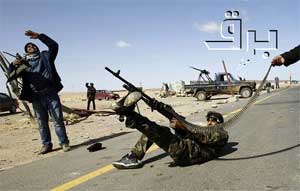
The sudden end of the Gaddafi regime some 6 months after the start of the Libyan revolt leaves some difficult questions unanswered for the left. Gaddafi’s determination to physically crush the revolt quickly transformed it into a civil war, a civil war that saw considerable imperialist intervention on the rebel side, intervention that was essential to their eventual victory. This and Gaddafi’s historic record led to some on the left taking his side in the civil war while other organisations tried to balance support for the ‘Arab spring’s’ arrival in Libya with opposition to imperialism. This question of where the balance lies between international solidarity with pro-democracy movements and opposition to imperialism could well rapidly return to the top of the agenda in a very much bigger way as the regime in Syria continues its months long military suppression of the democracy movement there.
(Image from B.R.Q. via Flickr under Creative Commons )
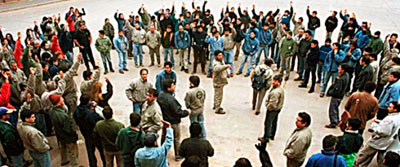 In the last issue we had a missive from the future. It told us of the great changes in the post-revolutionary anarchist world. In this article of the future society series, I will focus solely upon an anarchist vision of a future economy. This is called participatory economics, often abbreviated parecon, a classless economic system proposed primarily by activist and political theorist Michael Albert and, among others, economist Robin Hahnel. The model was developed through the 70s and 80s and the first exclusively parecon books were published in 1991. Many of their early writings concentrated on what they perceived as flaws in Marxist and Marxist-Leninist theory.
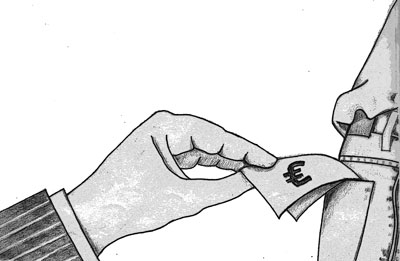 The new year brings a new tax from the Irish government and a new fight in the shape of the campaign against this household tax. Although we have beaten such taxes in the past, past victories are no guarantee of future success. In the light of the current low level of organisation and self-confidence amongst our class, we need to re-assess our methods of organisation if we aim to achieve the levels of mass participation needed for a victory. The argument of this article is that the existing traditional models of building local campaigns are not sufficient to the task and that we need to look to a new model of organising - the organiser model.
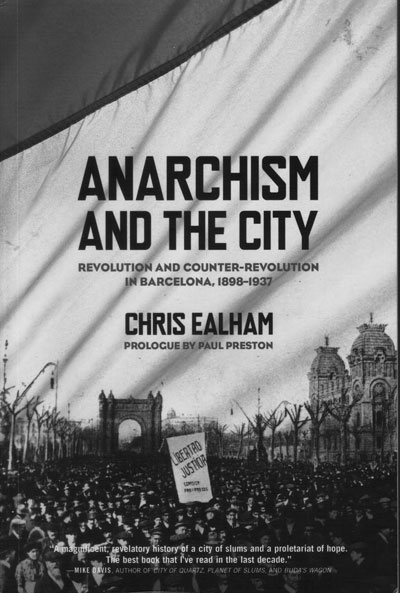 Seventy-five years ago, in Barcelona and across much of the rest of Spain, anarchists and other radical workers, in order to stop Franco’s attempted coup, stormed army barracks, took over the factories and kicked off “the greatest revolutionary festival in the history of contemporary Europe.”(p.173). A familiar story no doubt, however, unlike many ostensible working class histories of the period, that are often just histories of workers’ organisations, Ealham’s engaging writing and theoretical fluency give us a complete view of proletarian life, from community centres in the city’s slums, to unemployed groups of shoplifters, to general strikes and uprisings.
Workers Solidarity Movement position paper on Queer Liberation as re-written at the October 2011 National Conference. This position paper sits under the Sex, Gender, and Sexuality paper and does not repeat that material here.
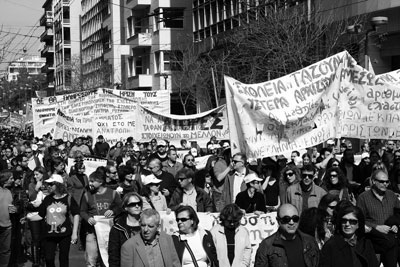 There is no doubt that the political history of Greece is full of oppression and political struggle - from dictatorships to political prosecutions, jailings, exiles, shootings, torture, civil war, and countless strikes, demonstrations, occupations and protests that are put down by extreme state violence.
Benefit gig for Eugene McDonagh Defence Fund to aid his upcoming Unfair dismissal Court hearing.
Eugene was a shop steward with Dublin Bus who was sacked over an unofficial strike in 2009,he had a record of opposing cuts in services and conditions and we believe was targetted because of this. Please pass on to all trade unionists and those concerned with injustice.
Music by trad/ballad group Boxty.
Clifton Court Hotel, Eden Quay
Sat. 22nd Oct. 8pm