

Over 30 years of anarchist writing from Ireland listed under hundreds of topics
An in-depth interview with Mark Bray, author of ‘Translating Anarchy’, a book which tells the story of the anti-capitalist anti-authoritarians of Occupy Wall Street who strategically communicated their revolutionary politics to the public in a way that was both accessible and revolutionary. [Audio]
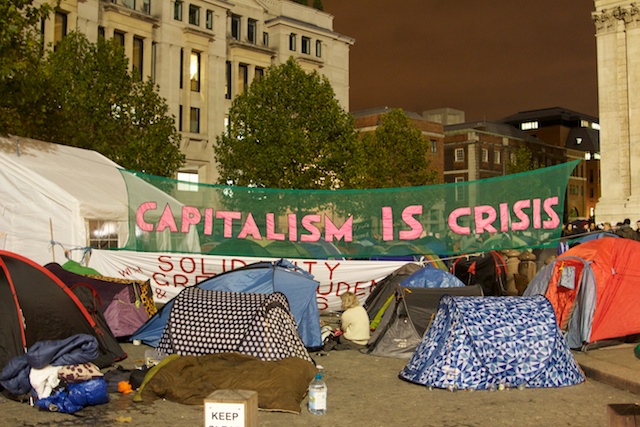 What if we build it and they don’t come? That was the experience of the left during the crisis - decades had been spent building organisations and a model of how crisis would create revolution, but when the crisis arrived the left discovered that the masses weren’t convinced. The expected pattern of crisis leading to small strikes and protests, then to mass strikes and riots and then perhaps to general strike and revolution didn’t flow as expected. Under that theory the radical left would at first be marginal but then as conditions drove class militancy to new heights, the workers disappointed by reformist politicians and union leaders, would move quickly to swell its ranks.
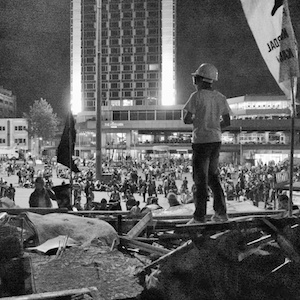 Tear gas is a very good place to start trying to understand what is happening in Turkey. The main purpose of tear gas is to terrorise and thus break up large crowds of people. In Istanbul over the last weeks huge quantities have been used over and over to prevent large anti-government demonstrations developing. This wasn't about 'riot control' - generally there was no riot to control. In this piece I'm going to put the Gezi park revolt in the context of the cycle of struggles that began in 2010 and of the specific economic, politcal and historical situation of the Turkish republic to try and draw out the lessons for all of us fighting global capitalism.
 The Occupy movement may have come into our lives just over a year ago with a bang but it went out months later with a whimper. Cathal uses the benefit of hindsight to look at the phenomenon as it manifested itself on these shores and what anarchists could have done to make it work better. The difficulties as Cathal argues did not lie in making arguments for democracy has been the case in so many other campaigns but in that the occupiers “didn’t see this conception extending to the realm of economic production” and in developing the 99%/1% analysis into a deeper class analysis. Recognising problems with current modes of consciousness raising, he utilises Paulo Freire’s pedagogical framework in an attempt to subject “our own political strategies, methodologies and theories to critical scrutiny”.
 It is becoming very clear is that there is no national solution to the crisis, even at the level of seizing the wealth of the 1% who live in Ireland. The debt is now too colossal and, in any case, the 1% have been given the needed time to move much of their liquid assets out of the country. The recent payment of a billion dollars in unsecured debt to those who gambled on Anglo is one of the final steps in that process. Confiscation of what they cannot move continues to be needed but there is no longer a radical social democratic solution based on taxing the wealth of the domestic 1%.
 David Graeber’s excellent insider account of the occupation of Wall Street [1] offers us an insight into what form the politics of resistance needs to take. It will be dual purpose, having to both build resistance and also build anew. It will be about renewal, hope and learning. Crucially, how you build resistance will inform and shape what is to follow. It will entail democracy being built from ground zero.
Talk by Mark Bray, author of Translating Anarchy: The Anarchism of Occupy Wall Street followed by an hour of discussion.
Translating Anarchy tells the story of the anti-capitalist anti-authoritarians of Occupy Wall Street, who strategically communicated their revolutionary politics to the public in a way that was both accessible and revolutionary.
Translating Anarchy: The Anarchism of Occupy Wall Street - talk by Author Mark Bray in Dublin by Workers Solidarity on Mixcloud
Mark Bray author of 'Translating Anarchy: The Anarchism of Occupy Wall Street' will be giving this talk in the WSM space in Seomra Spraoi, 19.30, August 18th as part of a European speaking tour.
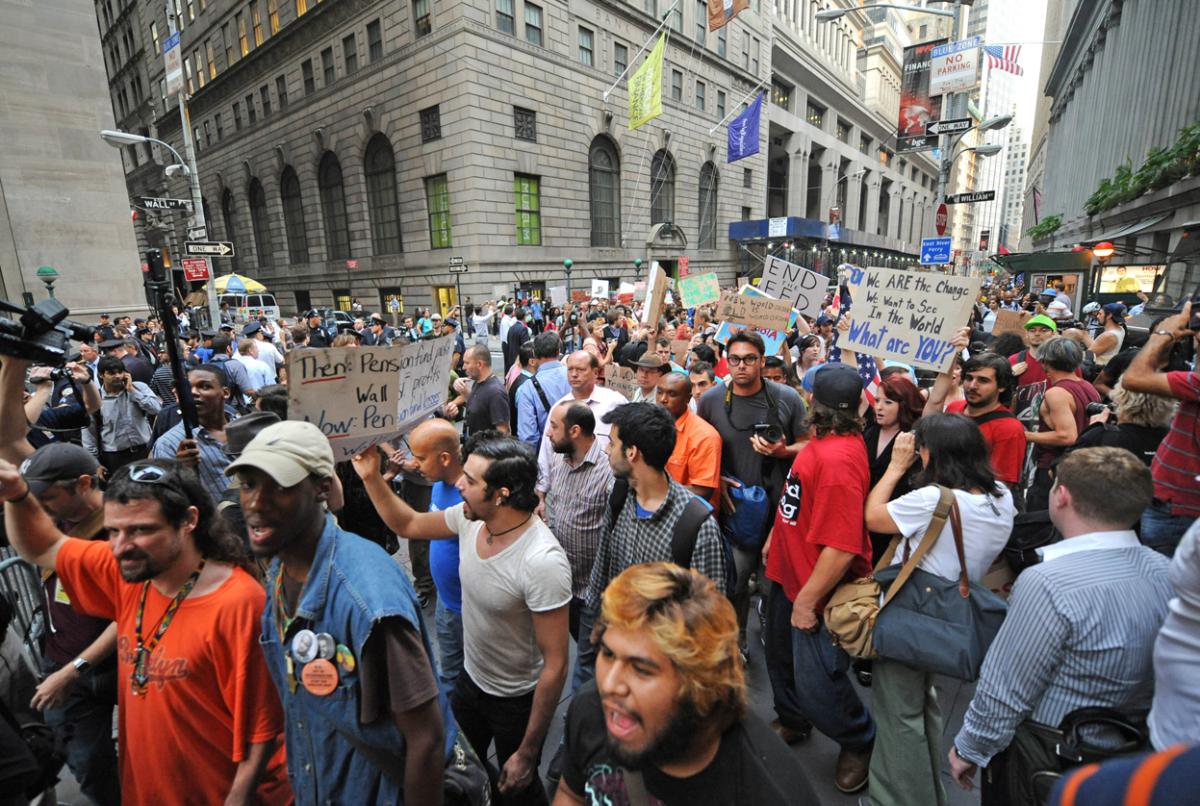 Many of us have an Occupy story. Mine took place in New York on March 17th of 2012, the six-month anniversary of the first occupation of Zuccotti Park, and the three-month anniversary of its eviction. I joined about five hundred or so Occupiers who had gathered after dark on the Manhattan side of Brooklyn Bridge. As we marched the three blocks or so to reclaim Zuccotti Park, NYPD’s finest, fully armed, literally lined the street each step of the way. And in the park itself a surveillance tower loomed overhead.
 In this 45 minute interview Sevinc who recently migrated from Turkey to Ireland provides context on the Gezi park struggle and the police repression from recent regional and left politics. Touches on the Turkish left & anarchist movement, LGBT & Kurdish struggles, the role of the Ultras, army & Police
Turkish anarchist on background to Gezi Park struggle in Istanbul - explanation for the left by Workers Solidarity on Mixcloud
