

Over 30 years of anarchist writing from Ireland listed under hundreds of topics
IRELAND IS a conservative country. Since the founding of the southern state 70 years ago, church has been intertwined with state. The majority of its citizens belong to the Catholic Church. Catholic ethos is enshrined in the constitution, in the laws, in the education system. Catholic tentacles make there way into most areas of public policy.
"Liberal Interventionism" is the new buzzword for 1993. In every newspaper they are baying for bloo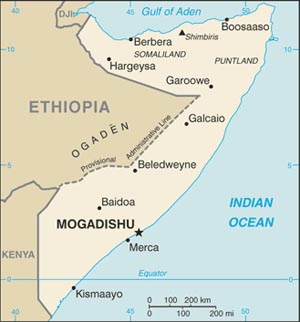 d. "US intervene in Bosnia", "America sort out Somalia" scream the headlines. People who might have questioned American intervention in Nicaragua, Panama or the Middle East are raging that the marines didn't go into Somalia sooner. Aid agencies who condemned America's role in Central America are begging them to extend their mission in Somalia. It is time to look at how the crisis in that country is being used to justify America's 'big brother' role in the New World Order.
A CYNICAL EYE is directed at anarchists whenever they speak of organisation. Is not anarchism the opposite to organisation? The simple answer is NO. Is it then the opposite of large or complicated organisation. The answer is equally simple, NO. So where do such mistaken ideas come from?
THE YEAR 1992 saw a lot of changes. There was the dissappearance of Czechoslovakia into two separate countries, the infamous Maastricht treaty, the war in Yugoslavia, the limited victory for women's rights in Ireland and our gold medal for boxing in the Olympics. However an event which you may have missed was the eightieth birthday of George Woodcock. To celebrate this, a book was published of Mr Woodcock's collected essays, entitled "Anarchism and Anarchists".
Alternatively this book could be called "All you ever wanted to know about Anarchism but were afraid to ask".
After reading Guerin's "Anarchism" you'll be a convinced anarchist, armed with lots of arguments and examples to throw at the Leninists. This book is an easy reading introduction to the main ideas in anarchist thought and the events that have helped to form them. It is divided into three sections, Anarchist theory, Anarchist economy and Anarchists in revolutionary practice.
THE WAR in what was Yugoslavia continues to drag on, with an ever increasing toll of people terrorized from their homes, killed or imprisoned. Most ordinary people are disgusted at the failure of the EC to do anything about it. Yet is EC or UN involvement any sort of answer or would it just make the situation worse.
Issue 34 of Ireland's anarchist paper Workers Solidarity 34 from 1992
Anarchism today
Anarchism to-day is growing in all of the Eastern European countries. As it was isolated for some 70 years in the soviet union and 40 years in Eastern Europe it will be a slow and painful process. In the west the anarchist movement grew slowly throughout the 80's and is now in the process of re-examining the anarchist tradition.
The articles from issue no 35 of the Irish anarchist paper Workers Solidarity, originally published in the Summer of 1992.
The mainly black cover of this pamphlet showing a drawing of a gagged woman with the words "censored" over her mouth give a graphic first sight into the contents of this pamphlet. A well written and informative document, we are brought through the recent history of Women's Rights in Ireland, in particular a woman's right to control her own fertility. (Review of "Ireland's Abortion Reality - Including a Guide to Abortion Services for Irish Women" by the Cork Abortion Information Campaign (£1.00) )
THE WAR in Spain (1936-1939) has often been portrayed as a simple struggle between Fascism and democracy. In fact it was anything but. A military coup launched in July 1936 was defeated by worker's action in most parts of Spain. There then followed a wide ranging social revolution (see Worker's Solidarity 33). As many as 5-7 million were involved in the collectivisation of agriculture and thousands in worker's control of industry. About 2 million of these were also members of the oldest union in Spain the anarcho-syndicalist; CNT.
