

Over 30 years of anarchist writing from Ireland listed under hundreds of topics
This is an excellent work. It is wide ranging, both in terms of subjects covered and geography. The latter makes a welcome break from most accounts of anarchism, which are sadly all-too Eurocentric. The former sees anarchist analysis expanded from the usual subjects of political authority and economic class into gender and imperialism (and national liberation struggles). It covers such perennial issues as anarchist organisation (including ‘Platformism’), the Spanish Revolution and a host of others.
If the recession is hitting everyone, who is buying the Goldvish mobile phone? This diamond-encrusted mobile costs a cool €1 million. See www.goldvish.com. And you can write the cheque with a limited edition Montblanc fountain pen for $25,000 (€17,072).
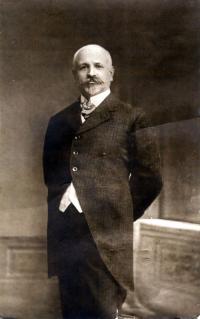 Over hundred years ago this year, a huge campaign arose around the world to save the life of Francisco Ferrer. A Catalonian by birth, Ferrer was an active anarchist and well known across Europe and the Americas for his radical views on education. Ferrer’s enemies were not for turning though and the campaigns failed. He shot to death by firing squad on October 13th 1909. Born to Catholic parents outside Barcelona, Ferrer became involved at a young age in anti-royalist activities in Spain. He fled to Paris to escape the Spanish authorities and there became involved with anarchism and the great love of his life: education and learning.
During his recent visit to Dublin, Workers Solidarity took the opportunity, over “bad coffee”, to chat to 93 year old Roma Marquez Santo about some of his experiences of the Spanish revolution. In 1936 Roma was a metal worker and a member of both the UGT trade union and the POUM, an anti-Stalinist communist party.
In October, Anti-Fascist Action successfully prevented a large European neo-nazi gig from going ahead in Kerry. Dozens of Slovakian, Polish and Czech neo-nazis were planning to spend a long weekend in Ireland to celebrate the birthday of a leading fascist living in Dublin who’s originally from Prague. AFA managed to stop the gig from taking place and even had the pleasure of bumping into a few of the Blood & Honour fascists in Dublin.
We carried out an anti-Lisbon campaign involving the distribution of 15,000 copies of a special edition of Workers Solidarity and putting up posters advocating a no-vote. Our activity was designed to begin a discussion about the sort of Ireland and Europe people would like to live in, and was centred on the needs of working people. The vote may have been lost but several thousand people got to hear about the anarchist alternative.
The economic crisis we face in Ireland is that huge amounts of money have been lost with the collapse of the property bubble. The question is, who will pay? Will it be the crooked bankers and dodgy developers responsible for this mess, or us, the ordinary working people?
NAMA is nothing short of straight class robbery – robbery from ordinary workers in order to shore up the property developers and big bankers who got us into this mess in the first place. It can be described as unfair, it can be described as immoral but in reality it’s naked capitalism at work.
During his recent visit to Dublin, Workers Solidarity took the opportunity, over “bad coffee”, to chat to 93 year old Roma Marquez Santo about some of his experiences of the Spanish revolution. In 1936 Roma was a metal worker and a member of both the UGT trade union and the POUM, an anti-Stalinist communist party.
Today the word "communism" is most often associated with the totalitarian one-party states of Soviet Russia or China. Nothing could be further from the anarchist goal of a stateless, free society. So the association of anarchism with communism seems, at first sight, perverse.
