Over 30 years of anarchist writing from Ireland listed under hundreds of topics
 A space at which people involved in a variety of struggles explained them and sought solidarity. There were three talks, Vegan Information Project , Stop NATO in Cymru and the International Organisation for a Participatory Society (IOPS).
Nelly Cuadros a community activist from the central department of Tolima, Colombia shared with the Dublin Anarchist Bookfair her stories of resistance, and lessons on uniting against injustice. Women play a central role in these communities and, in spite of discrimination as both peasants and women, are emerging as important social leaders for this pivotal time.
This talk was part of Latin American Solidarity Week. As a last minute addition to the program Leah also spoke about the struggle against Fracking in Ireland
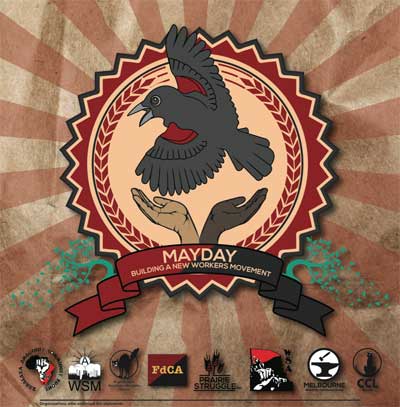 The WSM is one of the signatures on this international anarchist statement produced for Mayday 2014 involving 8 groups in 7 countries at time of publication. This is part of our ongoing involvement in the Anarkismo.net network involving anarchist organisations in some 30 countries.
 Extermination or communism is the choice - but this communism must be more than just the sharing of wealth (who wants all this shit?) - it must inaugurate a whole new way of working together. — Felix Guattari & Toni Negrii
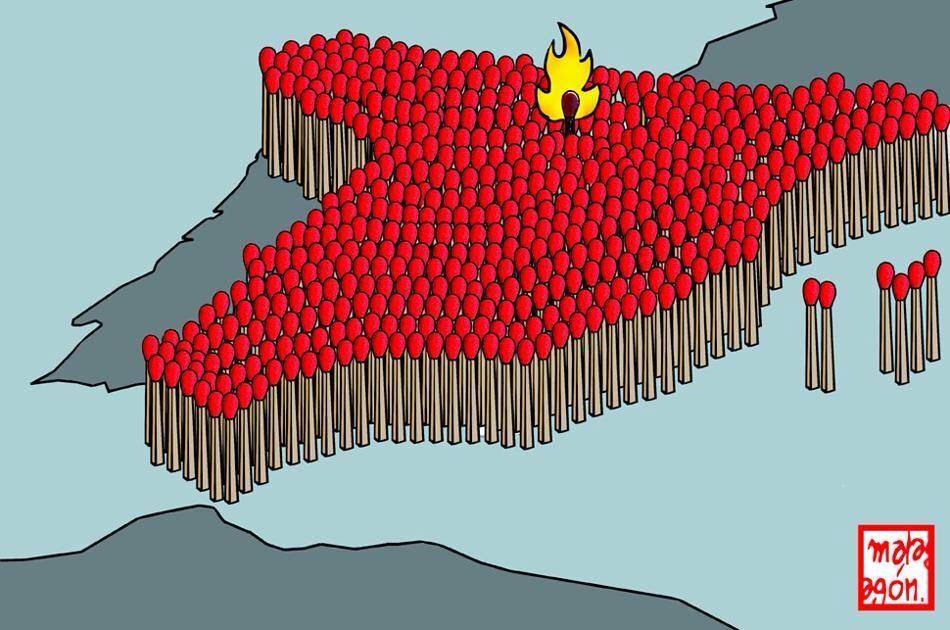 Just over a week ago, if you were thinking of cities in Spain most likely to host the start of a proletarian uprising, Burgos would have come pretty much at the bottom of the list. A sleepy, socially conservative, traditionally ultra-Catholic city in the Northern Castille plain, Burgos was up until now mostly known for its Cathedral and other mediaeval real estate and a local sausage uncannily reminiscent of Clonakilty black pudding. But since the initial clashes between police and protestors in the working class district of Gamonal on the night of Friday 10th January, Burgos has seen nights of continual rioting, a veritable military occupation by riot police, and solidarity demonstrations this week around 46 cities in Spain, including two successive nights of demos in the capital Madrid
The nostalgic left is a bit of shorthand I’ve started using for those on the left who have reacted to the disintegration of the old left by wishing for idealised simpler times. And perhaps more strangely blaming the collapse on what they see as threatening new developments, like intersectionality. They hold such newfangled nonsense responsible for the current failure of the left to get an echo from the general population.
 [Audio recording of recent talk and discussion in the Black Rose anarchist social centre in Sydney on the theme of identity politics and its relevance today. Below is the text of the talk given by Timothy followed by a lively and constructive discussion covering everything from sexual violence in radical spaces to ‘intersectionality,’ feminism and autonomous organising.]
This talk is at a midpoint between being an original work, and being an exegesis of Selma’s James justly famous “Sex, Race and Class.” This astonishingly brilliant work contains within itself the clear foundations of a historical materialist, or Marxist, conception of the relationship between capitalism and oppression. Because I have mixed in many of my own original points, both intentionally and no doubt by accidental misinterpretation, I would strongly suggest everyone here goes and reads the original.
Privilege and the theory around it is a significant topic of debate at the moment among those interested in radical social change. Touching on many issues dear to the hearts of anarchists, it is hard to avoid.(i) Yet, the two are not fitting together as well as they should and there is a sense of unease about this. (ii) Much of this is because privilege theory has emerged from US academic circles rather than anarchist ones and, ironically, has been co-opted to protect middle- class privileges. (iii) This is a situation in need of repair if we are to maintain our links with feminist, anti- racist and other struggles against oppression. If we are to create a mass movement capable of social change then it has to be able to engage with everyone in the first place.
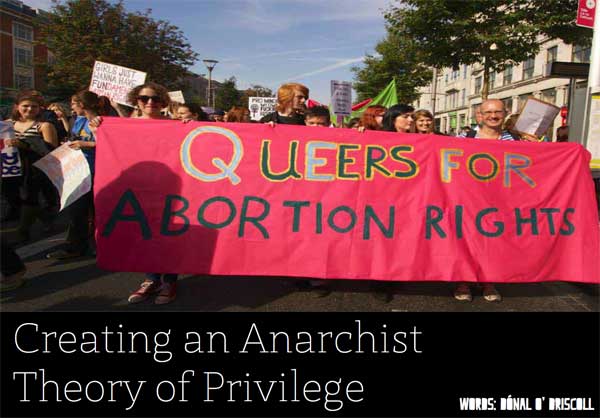
Guest writer, Dónal O’Driscoll, contributes to the ongoing discussion on intersectionality and privilege theory.
 As is the case with most of my comrades, I did not suddenly wake up to find out that I am an anarchist. It was rather a gradual process that started with a determination to fight racism, challenge patriarchy and doubt the existence of some omnipresent old man with white beard.
I was born in 1987 to a Russian mother and a Georgian father in Siberia during the last years of the USSR and spent most of my childhood travelling back and forth between Russia and Georgia, changing different cities and schools and meeting people who were very eager to prove to me how much of a better nation Georgia is in comparison to Russia and vice versa. What affected my ideology the most was my family’s decision to move to Greece where I got to meet many interesting people and during the last years of school together with friends to start reading books on atheism, feminism and anarchy.
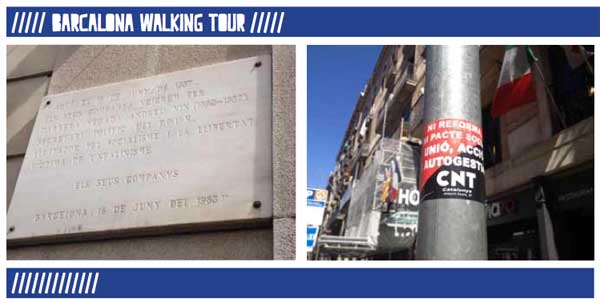
Ask an anarchist for an example of a time and place where their ideas were put to the test and they will most likely reply with “Barcelona, 1936”. In July of that year, the workers of Barcelona, mainly organised around the anarcho-syndicalist Confederación Nacional del Trabajo (CNT; "National Confederation of Labour") rose in opposition to the fascist generals' coup that was gripping the south of the Spanish state.