

Over 30 years of anarchist writing from Ireland listed under hundreds of topics
In Issue 1 of the Irish Anarchist Review, Andrew Flood put forward a critique ('Capitalist crisis and union resistance in Ireland') of two of the other articles in the same magazine, my article on Faceless Resistance and James R's interview with Alex Foti. His critique centers around the experience of the radical left in Ireland around workplace organising since the anti-globalisation movement and the experience of workplace activism since the economic crisis. In his article he attacks what he sees as an unbalanced concern with marginal sectors of employment on the part of the radical left since the turn of the century. He argues that the experience of the crisis shows that radical efforts to organise 'precarious' workers do not pay off. Instead, radicals should focus on organising where there is a greater chance of having a serious influence - i.e. within large mainstream trade unions.
The audio is from the Dublin anarchist bookfair and has two speakers talking about the reform movement and feminism in Iran in general and the million signatures campaign in particular.
In mid-June the Irish Congress of Trade Unions Public Services Committee voted to accept the ‘Croke Park deal’. ‘Social partnership’, presumed dead and buried when the government unilaterally imposed pay cuts on public sector workers in the December ’09 budget, was revived and given a new lease of life. But this is ‘social partnership’ with a difference. Instead of the union leadership believing that ‘partnership’ gives them some input into government policy (as they have wrongly thought for the past 20 years), all they can now offer in its defence is that this is the “least worst deal” and that “it’s better to be inside the tent than outside.”
The unions have warned that any attempt to introduce mandatory IBEC (Irish Business and Employers Confederation) recognition would endanger working conditions, pay rates and general government policy.
Recorded at the Dublin anarchist bookfair, three speakers look at the economy, what the real situation of the resistance is and what needs to be built and examples of what has been achieved in the unions to date. This is followed by contributions from the floor from a wide range of perspectives.
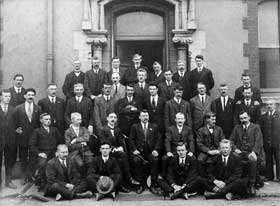 Connor Kostick author of Revolution in Ireland: Popular militancy 1917 to 1923 spoke at the 2010 Dublin anarchist bookfair about the wave of workplace occupations and 'soviets' as well as the general strikes that are forgotten by conventional nationalist histories of this period.
The audio is about one hour in length and was first published on indymedia.ie.
Progressive taxation is a taxation system which seeks a higher tax rate for higher incomes. It is a relatively common feature in the western democracies. In Ireland however, its implementation is almost entirely nominal.
Capitalism as a way of organising our society is bankrupt. It is bankrupt in both a literal and moral sense. Capitalism is at odds with any progressive notion of democracy in the 21st century
 The current violence errupting in the southern region of Kyrgyzstan is deeply troubling.
If we are to go by the news reports given by the BBC, the violence is the culmination of long standing ethnic tensions. If we are to believe the Economist's recent article "Stalin's Harvest" we are seeing the inevitable fruits of Stalin's labour.
According to The Economist the ethnic violence is to be attributed to Stalin based on his inefficiency in drawing borders. Any ethno-geographer of the region would acknowledge that drawing effective borders, even if based on language groupings - is effectively impossible for Central Asia as populations are organised as consistently by elevation as by region. Uzbeks typically being in more sedentary populations at lower elevations, while the Kyrgyz historically lived in pastoral highlands. When ethnicity is brought into the equation things become even more complex. The result is a maze of populations where borders are abitrary by necessity.
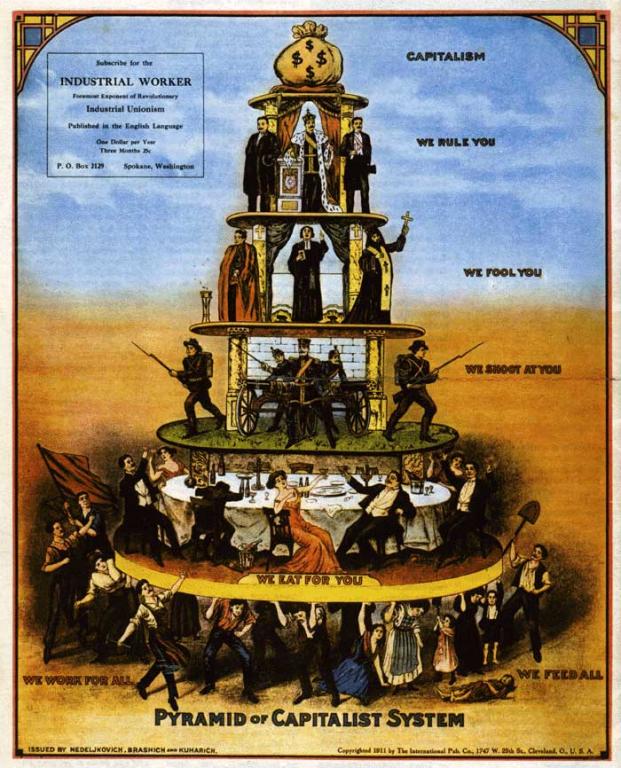 The state is a central concept in the political philosophy of Anarchism. Anarchism is often defined as being an anti-state ideology. While this is sometimes a useful way to distinguish anarchists from other state socialists it also leads to a fair bit of confusion. We will look at the source of this confusion with the aim of showing that anarchism is in its essence opposed to rulers and is not a naive or idealistic form of anti-statism.
