

Over 30 years of anarchist writing from Ireland listed under hundreds of topics
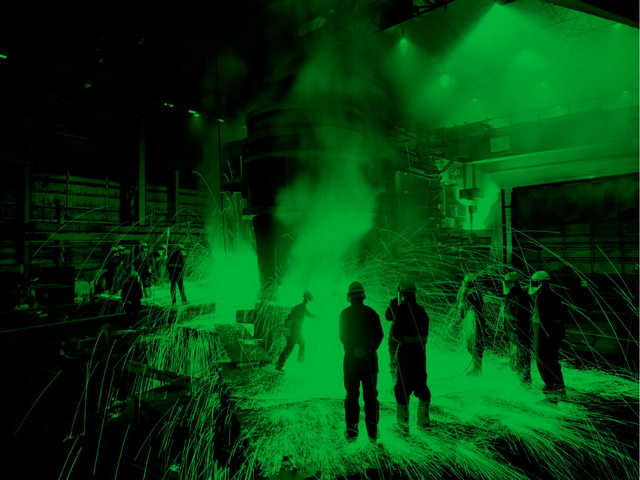
Undoubtedly, Greece is the country that has suffered the most during this last and totally unrestrained wave of liberalization and fierce devaluation of labour which has been sweeping Europe since the start of the financial crisis in 2008. At the same time there are a multitude of political anti-systemic oppositional forces which have managed to maintain a living presence in Greek society.
The third world war
is coming
That's what they say
Fuck
This ain't gonna be
a class war either
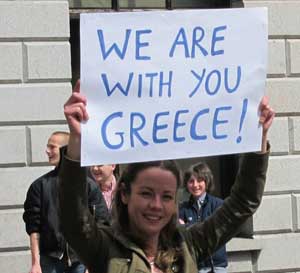 Four anarchists including two Greek anarchists examine the real effects of the Euro crisis on the Greek population, resistance to the attempts to impose all the costs of the crisis on ordinary Greeks and the meaning of the second round of elections in particular the role of SYRIZA
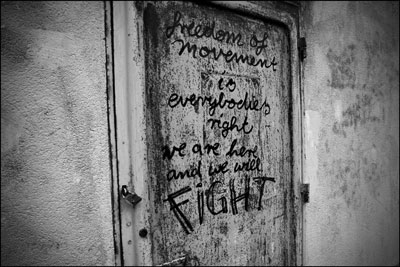 While there is a tradition of grassroots campaigning against racism in Ireland, there is less discussion of what it means to be an anti-racist from an anarchist perspective. Most material focuses on obvious forms such as hate-speech or supporting Travellers & migrants in practical terms. The issue this article seeks to raise, is that in order to get it right we also need to look at ourselves on a personal level, recognise privilege and develop a wider critique that is truer to our own politics. As such I am writing as a white anarchist, to other white anarchists.
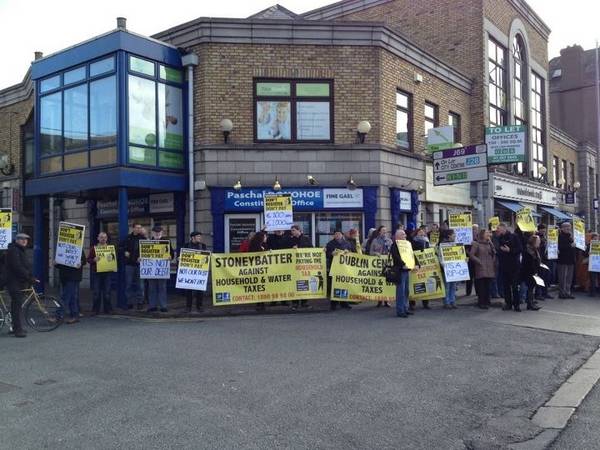 Almost a month has passed since the national conference of the Campaign Against Household and Water Taxes (CAHWT). While on the surface things look pretty quiet, this is a critical juncture for the campaign. The momentum that has been lost by the attachment of the CAHWT to the unsuccessful No referendum campaign will only be rebuilt when the government make their next move, but those active in the campaign need to use the coming weeks to prepare for that eventuality.
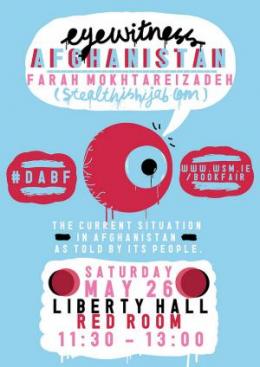 Eyewitness Afghanistan outlined the current political situation in Afghanistan as told through interviews Farah conducted with Afghan politicians, artists, religious leaders, community organizers, journalists and activists between December 2010 and February 2012.
.jpg) It was as if our streets were paved in gold as the Olympic torch made its way across this bright new shiny Northern Ireland. We listened to our local business leaders and political class lining up to praise this symbol of hope and reconciliation, but beneath this spectacle of spin and ‘regeneration’ smokescreen is a showcase of corporate class privilege and profiteering.
It was as if our streets were paved in gold as the Olympic torch made its way across this bright new shiny Northern Ireland. We listened to our local business leaders and political class lining up to praise this symbol of hope and reconciliation, but beneath this spectacle of spin and ‘regeneration’ smokescreen is a showcase of corporate class privilege and profiteering.
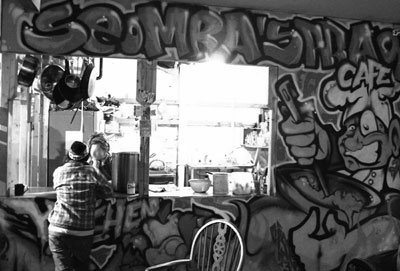 Workers’ co-operatives have always been championed by sections of the left and wider labour movement - from their advocacy by 19th century Welsh social reformer and utopian socialist Robert Owens to Proudhon through to their existence in various state capitalist countries today such as Cuba. While workers’ co-operatives can provide a small example of anarchist ideas based on self-management, direct democracy and mutual aid in action, we should not be blinded by their contradictions and should query their effectiveness as a strategy for real revolutionary transformation.
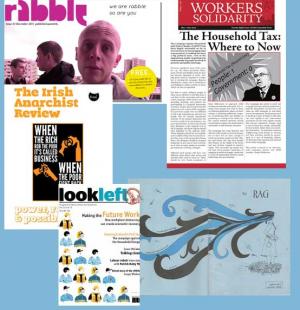 This session of the 2012 Dublin Anarchist Bookfair looked at the value of paper and ink when the net is usually declared the real frontier. We asked our panel to track some of the connections between todays underground radical press, and what went before.
Just Books, the anarchist bookshop, is back selling a wide range of topics such as: Irish and international labour history, Irish politics, anarchism, anti-capitalism, feminism, communism, socialism, sex and sexuality, current affairs, globalisation, racism/anti-racism, environmental issues and more at the Na Croisbhealaí Béal Feirste cafe. 48 King Street Belfast which is open 12-5pm Tuesday to Saturday.
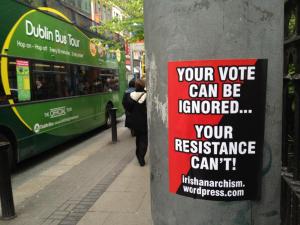 With votes still being counted it has become clear that the largest block of potential voters refused to take part in the fiscal compact referendum, rejecting the arguments that they could either vote for 'stability' or against 'austerity'. Quite possibly more people chose to boycott the referendum then the combined Yes and No voters. On top of this some 17% of the population who live and pay tax in Ireland were excluded from voting at all in the referendum. This means as many as 2/3 of the adult population did not vote in the referendum.
