

Over 30 years of anarchist writing from Ireland listed under hundreds of topics
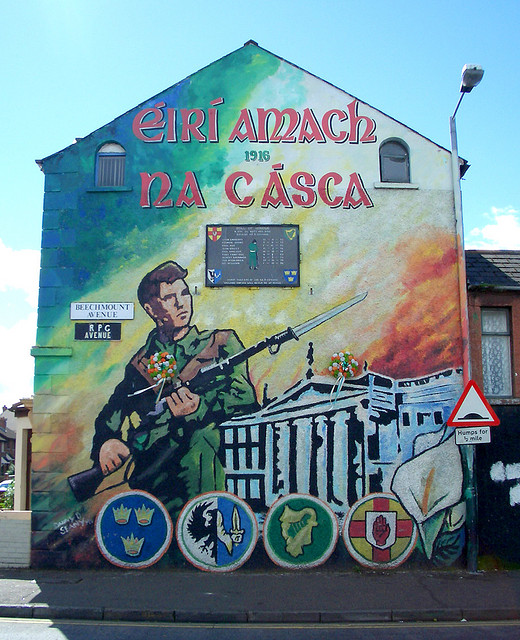 Growing up in West Belfast, as Maíria Cahill did, you are immediately introduced and submerged into a culture of republicanism and of the armed struggle. Murals, flags and gardens of remembrance make it impossible to escape. What is lurking in the shadows of these symbols and the shadows of local heroes is the clandestine sexual abuse that went on during those turbulent years – clandestine to the public but an open secret within the republican family.
Living in a community where Sinn Féin have an absolute political monopoly, it was incredibly brave of Maíria to waive her right to anonymity and challenge the conventional wisdom that surrounded her case – the conventional wisdom that the IRA was responsible for. What we have seen as result, is an attempt by Sinn Féin, as they quite often do, to make Maíria’s rape something it is not. They are trying to write this off as an attack on Gerry Adams and are actively adding to rape culture by implying that Maíria has made it all up for these ends.
Zaher Baher of the Kurdistan Anarchists Forum spoke at the 2014 London Anarchist Bookfair about the two weeks he spent in Syrian Kurdistan in May 2014, looking at the experiences of self-management in the region, experiments that have become more widely discussed as the result of the defense of Kobane against ISIS. Zaher is also a member of Haringey Solidarity Group
Anarchist Eyewitness to self-management in Kurdish Syria / West Kurdistan by Workers Solidarity on Mixcloud
Zaher Baher of the Kurdistan Anarchists Forum spent two weeks in Syrian Kurdistan in May 2014, looking at the experiences of self-management in the region, experiments that have become more widely discussed as the result of the defense of Kobane against ISIS. This account tells in some detail what he saw and what conclusions he draws. Zaher is also a member of Haringey Solidarity Group and spoke at the 2014 London Anarchist Bookfair about his experiences. This account was originally published as 'The experiment of West Kurdistan (Syrian Kurdistan) has proved that people can make changes'
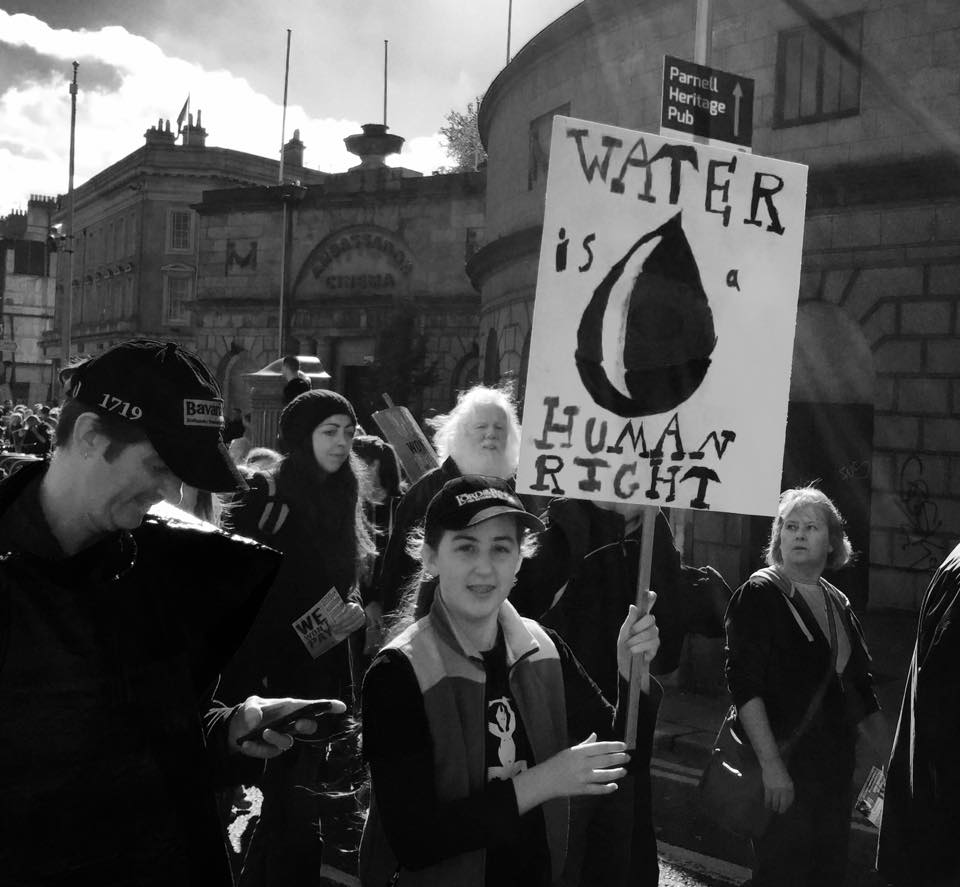 Saturday last, 11th October, saw tens of thousands take to the streets of Dublin in a powerful, colourful and vibrant display of opposition to the Irish government’s attempts to impose water charges.
The numbers who turned out were so large and took everybody by surprise to such an extent that nobody – media, gardai or organisers – could give an accurate estimate of actual numbers. Estimates varied from 30,000 to 100,000, but whatever the exact figure was it was clear that this was the start of something huge.
It was an energising and invigorating protest to be part of. From well before the start time, people were arriving in their droves at Parnell Square. To see groups of people arriving in by bus from all over the city and from around the country was inspiring and should have a huge impact on the political confidence of all those who took part.
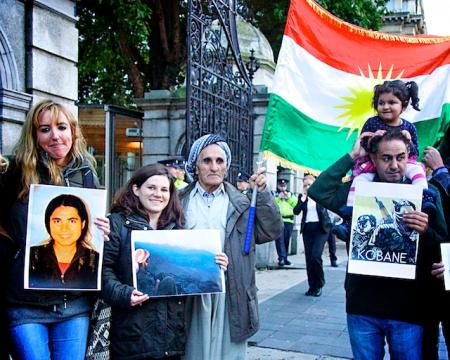 The WSM considers the struggle for Kobane and the autonomous zones of Rojava to be crucial for the development of a political alternative for the region. We view Daesh as the toxic excrescence of the results of global and regional imperialist intervention in Syria and Iraq.
This is a list of radical writings around the issues of intersectionality, privilege (theory), identity (politics), and difference.
A critique of liberal conceptions of 'intersectionality' and an outline of an anarchist, class struggle approach.
We need to understand the body not as bound to the private or to the self—the western idea of the autonomous individual—but as being linked integrally to material expressions of community and public space. In this sense there is no neat divide between the corporeal and the social; there is instead what has been called a “social flesh.” - Wendy Harcourt and Arturo Escobar1
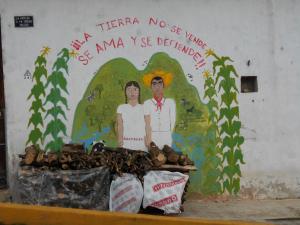 OLINTLA is a small village in the Sierra Norte, a remote, mountainous region to the east of Mexico City. The landscape there is dramatic, green and beautiful, mostly sunlit jungle, rivers and wildlife. The hillsides are occasionally populated by farming towns and villages, mainly indigenous communities whose way of life is constantly threatened. In recent years, the Mexican state has accelerated plans for the development of a vast hydroelectric power plant in the area, directly impacting the people in Olintla and about a dozen or so neighbouring communities. What appears on the surface to be a ‘green energy’ project is in fact closely bound up with community displacement and the aggressive extraction of local oil and gas reserves, primarily to the detriment of the region’s water resources and wider capacity to sustain life. Unfortunately, Olintla is far from an atypical case but represents how indigenous communities in Mexico, as in Latin America more generally, tend to bear the brunt of the state’s creation of opportunities for private capital accumulation, called ‘development’ by those in power and ‘projects of death’ by the communities affected.[1]
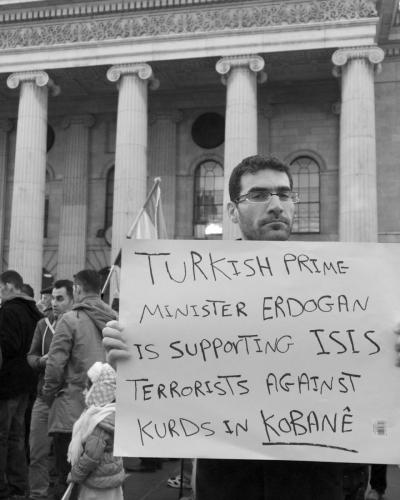 The notion that the fall of Kobanê could be prevented by the intervention of the Turkish army is a smokescreen that covers the truth that they are already intervening - on the side of ISIS. The Turkish state's selective blockade of the border, which allows arms and volunteers to cross for ISIS, but strangles them for the YPG defenders of Kobanê is the decisive intervention that is giving ISIS the upper hand.
This fundamental truth has been put forward by some minority voices in the mainstream media. Chiefly those intrepid reporters on the ground trying to cover the story. Honourable mention should be made of the BBC's Paul Adams amongst others. But these marginalised voices have been drowned out by the official media line issuing from the central editorial offices downwards, that the Kurds of Kobanê and Turkish Kurdistan are protesting "against Turkey's inactivity" or "failure to intervene". This is the world turned upside down. And Orwellian newspeak where the exact opposite of the truth is reported as accepted fact. The banners the protesters are holding say "Turkey Stop Supporting ISIS".
Last week, it was revealed that four Irish NGOs – the Immigrant Council of Ireland, Nasc Irish Immigrant Support Centre, Focus Ireland and Sonas Housing – had submitted a report to the Minister for Justice about the accommodation of suspected sex trafficking victims in direct provision centres. While the report raises a number of very valid concerns, it’s unsurprising that one particular line has received the most attention – the allegation that “traffickers have used the asylum system for residency and accommodation while simultaneously trafficking victims”. The media focus on this uncorroborated claim is unfortunate (albeit totally predictable) at a time when asylum seekers’ complaints about their housing are finally starting to get the headlines they should have had for years.
