

Over 30 years of anarchist writing from Ireland listed under hundreds of topics
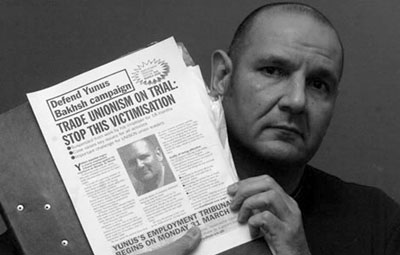 Yunus Bakhsh, a psychiatric nurse from the north east of England has won a four year battle against his bosses. Sadly his union, the public service giant UNISON, was about as much use as a tailor in a nudist camp. This should be of interest to the 39,000 workers in Northern Ireland who are in Unison.
Yunus had a 23-year spotless record in nursing. What annoyed his employer, the local NHS trust, was his union activity and radical views. He was the union branch secretary and also a member of the Socialist Workers Party (SWP).
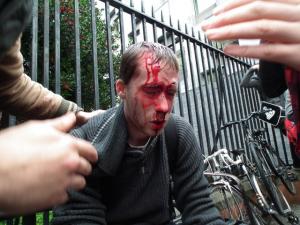 Six days after last weeks Garda riot in Dublin the state TV channel was finally forced to broadcast the footage of cops beating students that has been circulating on the internet from the time of the assaults. The RTE 1 TV report referenced the fact that thousands of people were viewing this footage at a couple of points in the report including at one point admitting that 86,000 had viewed one clip.
The WSM has called for support for the Student Protest Against Garda Brutality called by students from the Free Education for Everyone and Students in Solidarity networks. Next month’s budget will see savage attacks on public services and people’s living standards in order to protect the wealthy. A very clear message is now being delivered to the people of this state. The gardaí and their political masters want to frighten people off the streets, they do not want us to exercise our democratic right to protest
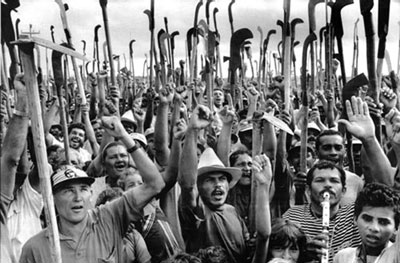 As this issue of Workers Solidarity goes to print, Brazil is about to elect a new president. After eight years, the Workers’ Party (PT) incumbent, Lula, must step down. His chosen successor, Dilma Roussef, is poised to become Brazil’s first female president, as she holds a 46.9% to 32.6% lead over her closest rival after the first round of voting. Roussef is a former urban guerrilla who was tortured by the western-backed military dictatorship (1964-1985) before throwing her lot in with electoral politics, joining the PT in 2000.
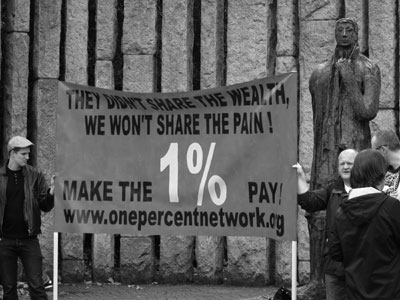 Countless walking tours make their way around Dublin daily; generally educating the masses of tourists on the lives lived on these streets before us. It was a different kind of walking tour, comprising around 200 people, that hit the streets around Stephen’s Green on October 9th last.
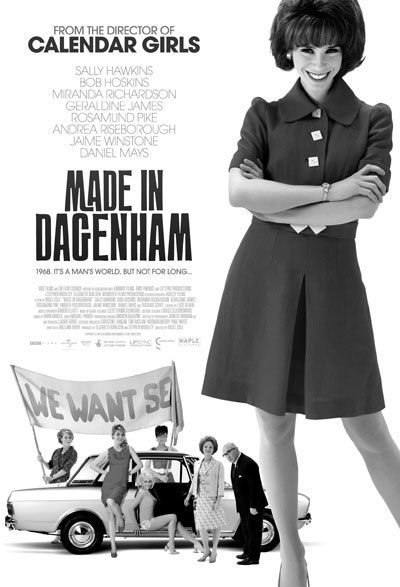 If you like ‘feel good’ films this is for you. Leaving a cinema feeling both entertained and optimistic is rare enough, and this film scores highly on both points.
In 1968 there were 55,000 working at Ford’s massive plant in east London. One of them is machinist Rita O’Grady, who makes seat covers with 156 other women at the Dagenham factory. Thinking that women won’t cause trouble, management regrades them as ‘unskilled’.
 Last year the Exchequer lost €7.4bn as a result of the tax break regime, over three times the EU average. According to the government’s own Economic and Social Research Institute, 80% of the tax relief available on pension contributions goes to the wealthiest 20% of earners.
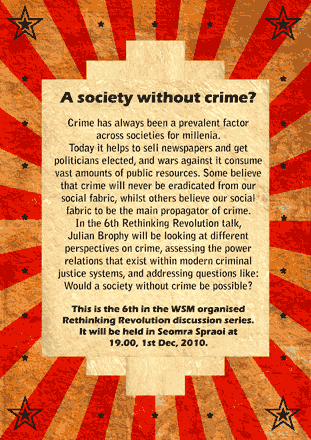
Crime has always been a prevalent factor across societies for millenia; today it helps to sell newspapers and get politicians elected, and wars against it consume vast amounts of public resources. Some believe that crime will never be eradicated from our social fabric, whilst others believe our social fabric to be the main propagator of crime. In the 6th Rethinking Revolution talk, Julian Brophy will be looking at different perspectives on crime, assessing the power relations that exist within modern criminal justice systems, and addressing questions like: Would a society without crime be possible?

The purpose of this text is to try and tell the story of our current economic situation, how we got here, and what we can expect from the near future, so as to better understand the tasks facing us.
This is neither an academic text on history, nor yet, god forbid, a treatise on macroeconomics. So in the interests of telling a listenable story we will use the old storytelling technique of jumping directly into the middle and exploring outwards in flashback and flash-forward vignettes to build the big picture. But where is the middle?
 James McBarron was a long time activist in Sinn Fein before becoming an anarchist in the aftermath of the Good Friday agreement. In this opinion piece he wrote for publication on republican discussion forums he argues that although it is "completely understandable that most thinking republican activists are angry and enraged at how they were duped and used by the former IRA and current Sinn Fein leadership … this does not excuse people from properly examining their own roles and politics and the politics and conditions that have lead to the current situation." He then points to four areas which he thinks represent fatal weaknesses of 'dissident' Irish republicanism in general.