

Over 30 years of anarchist writing from Ireland listed under hundreds of topics
 Welcome to Issue 3 of The Irish Anarchist Review, produced by the Workers Solidarity Movement. This magazine aims to provide a forum for the exploration and discussion of theories, thoughts and ideas about where we are and where we would like to be in terms of political struggles today.
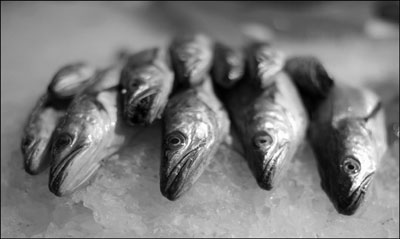 Recently, a number of the UK’s celebrity TV chefs have launched “Fish Fight”[1], a campaign to address the rapidly increasing crisis of declining fish stocks that threaten the continued supply of fish for the dinner table.
The campaign’s aims are worthy and laudable and the sincerity of the celebrity chefs involved is unquestionable. But as much as they understand food and the threat of the collapse of fish stocks, their limited understanding of the economic forces behind capitalism’s inability to sustainably manage limited natural resources guarantees that this well-intentioned campaign is ultimately doomed to failure.
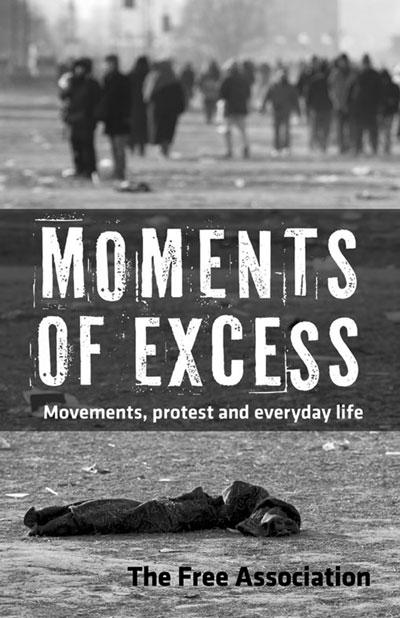 In November 1999 a new cycle of struggles burst into the media consciousness of the world with the spectacle of anti-WTO protesters confronting police in the streets of Seattle. In fact this was a cycle that had first raised its head in England earlier that year when astonished TV viewers turned on the news on June 18th to discover that the City of London was under siege by ‘anti-capitalist’ protestors, the first time that term had ever been heard in media reporting. ‘Moments of Excess’ is a collection of texts by the Free Association written from 2001 to 2011 paralleling this cycle of struggles, of the so-called anti-globalisation or counter-globalisation movement with its succession of counter-summit mobilisations from Seattle, Prague, Genoa, Evian, Gleneagles and Heiligendamm amongst others.
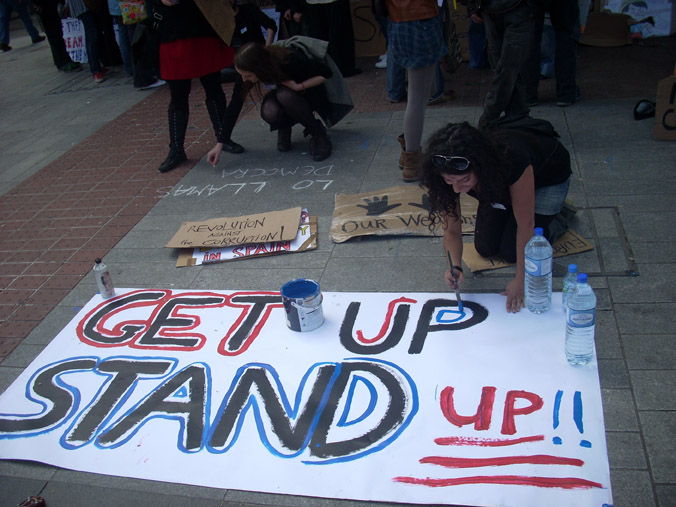
Following on from Saturday's Spanish Revolution solidarity protest in Cork City there was another big crowd on the street of the city Sunday. As the issues that have brought the people of Spain out to protest are just like those affecting people in Ireland and across Europe, there was many calls to make this movement international.
The solidarity group here plan to return to the Grand Parade every day this week to hand out information and discuss the events in Spain with passersby. This will be between 11am and 1pm, and from 6pm to 8pm. Come along and find out what's going on!
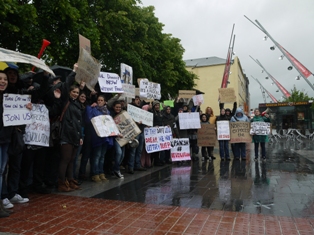 Workers and students from the areas of Spain living here in Cork protested today on the Grand Parade in support and solidarity with the movement for ‘Real Democracy’ in their homeland. Over a hundred turned up in pouring rain to voice and sing their anger at the failure of capitalism and lack of hope and possibilities that is offered to us under the present ‘free market’ regime.
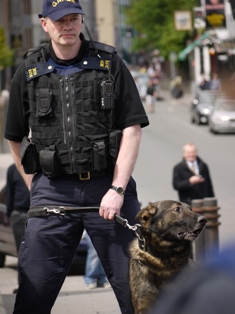 Spin and window-dressing were the order of the day this afternoon in Cork where a heavy-handed police presence ensured that the British Queen’s visit to the city could be presented to the outside world as ‘positive and welcoming’ and ‘a real Irish welcome’. A sizeable protest on Sullivan’s Quay was met with lines of riot police and police dogs guaranteeing that those who opposed the visit were kept far away from where they could be seen and heard.
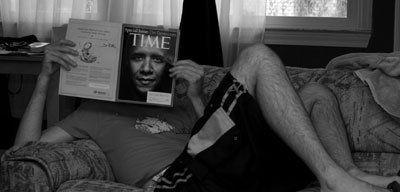 The election of Barack Obama to the White House in 2008 was one of the most celebrated electoral victories of recent times. Not since Nelson Mandela’s win in South Africa, following the collapse of the Apartheid regime, was the supposed power of the ballot box so publicly celebrated and displayed.
Obama’s victory was hailed as a triumph for the ‘democratic process’ and was widely touted as a fine example of how people power and electioneering can trump entrenched bigotry and money.
 The electoral system in the United States is notoriously conservative. Two political parties, the Republicans and the Democrats, dominate. To be a Presidential hopeful, you need to have stacks of money – to pay for advertising and campaign teams and so on and so forth. Usually this means courting big business and corporate interests in return for campaign donations.
As a former senator Obama was well aware of this situation and how things worked. Ultimately, however, his success lay in the fact that he mobilised in two distinct constituencies - among the business community but also amongst the grassroots voters. This latter aspect – his grassroots mobilisation - received considerable prominence because it was ‘news’ and noteworthy. His clear and unambiguous business friendly comments received less attention, but were nonetheless important.
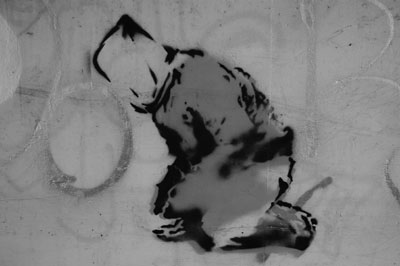 The Guantánamo Bay detention facility was created under George Bush’s Presidency in the aftermath of the attack on the World Trade Centre in New York in 2001. Described as ‘a place where normal legal rules’ do not apply, it quickly became infamous for harsh and extreme conditions of detention. Interrogators practiced a variety of torture techniques on prisoners at the facility including the now well known water-boarding procedure.