

Over 30 years of anarchist writing from Ireland listed under hundreds of topics
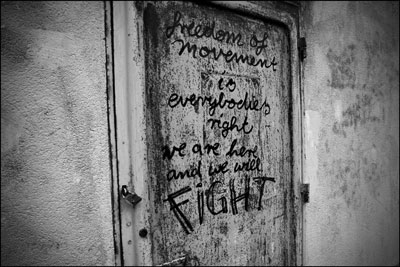 While there is a tradition of grassroots campaigning against racism in Ireland, there is less discussion of what it means to be an anti-racist from an anarchist perspective. Most material focuses on obvious forms such as hate-speech or supporting Travellers & migrants in practical terms. The issue this article seeks to raise, is that in order to get it right we also need to look at ourselves on a personal level, recognise privilege and develop a wider critique that is truer to our own politics. As such I am writing as a white anarchist, to other white anarchists.
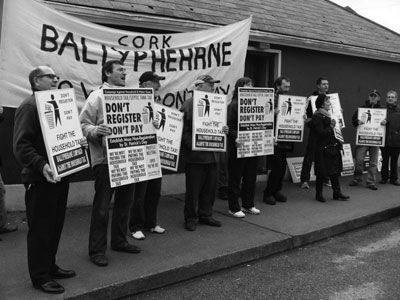
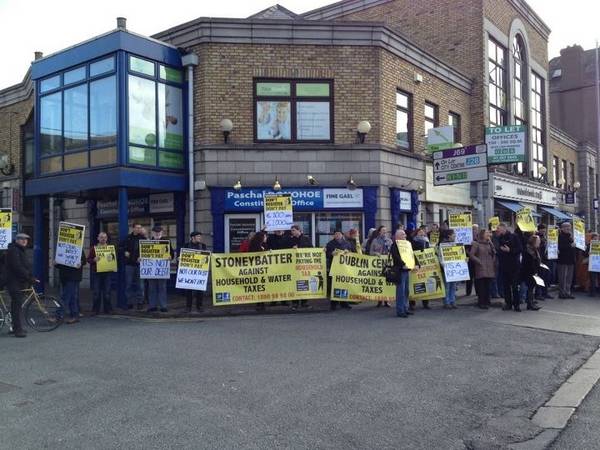 Almost a month has passed since the national conference of the Campaign Against Household and Water Taxes (CAHWT). While on the surface things look pretty quiet, this is a critical juncture for the campaign. The momentum that has been lost by the attachment of the CAHWT to the unsuccessful No referendum campaign will only be rebuilt when the government make their next move, but those active in the campaign need to use the coming weeks to prepare for that eventuality.
 There’s been a lot of talk lately about participatory and direct democracy. Renewed interest in alternative forms of organising society has arisen from increasing dissatisfaction with mainstream politics and the domination of the economy by a few corporations. This dissatisfaction has found its expression in the Arab spring, the May 15th movement in Spain and the Occupy movement in the English-speaking world. Where the anti-capitalist movement of the last decade focussed almost exclusively on the power of the corporations and finance capital, this current tendency is to also focus on politics and the state.
 I approached this film with a lot of trepidation, putting off watching it for weeks. Much of this was down to my being uncomfortable with boxing and fist-fighting of any kind - I just don’t enjoy watching people knocking the shit out of each other - but I was also uncomfortable about colluding with a project in which a settled film-maker would bring a settled audience to leer into Travellers’ lives. Such fears are not unfounded by any means. The media is full of such ‘Big Fat Racist’ selective framings of Travellers’ lives, served up weekly for the titillation of scoffing settled audiences. Will Ian Palmer’s 12 year labour of love prove to be different? Will he champion his subjects by turning his camera angle to break with our society’s pervasive and racist framing of Travellers as a problematic, and ultimately inferior culture? Or will he take the easy and well-worn path in the way that Channel 4’s “Gypsy Blood” did and grotesquely reframe Travellers (and Romanies, whom it doesn’t bother to differentiate from Travellers) as uncultured monsters?
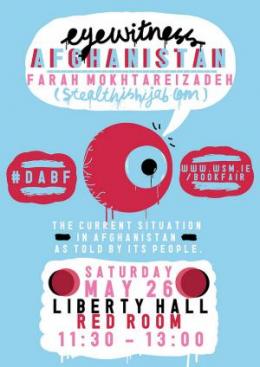 Eyewitness Afghanistan outlined the current political situation in Afghanistan as told through interviews Farah conducted with Afghan politicians, artists, religious leaders, community organizers, journalists and activists between December 2010 and February 2012.
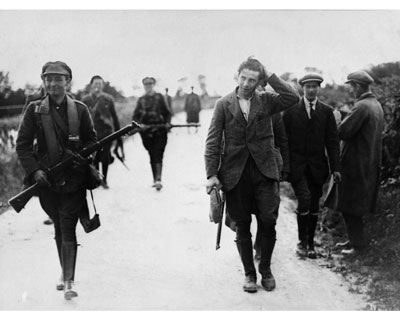 The 1916 proclamation, the manifesto of the 1916 rebels, states: “The Republic guarantees religious and civil liberty, equal rights and equal opportunities to all its citizens, and declares its resolve to pursue the happiness and prosperity of the whole nation and of all its parts, cherishing all the children of the nation equally, and oblivious of the differences carefully fostered by an alien government, which have divided a minority from the majority in the past.”
These noble aspirations would become almost a bible of Irish Republican ideals and within six years, after the end of the War of Independence in 1922, a section of that movement had a chance to implement these ideals. However the society established after the war of independence “The Irish Free State” was a pale shadow of even the most modest interpretation of this document. Civil liberties were almost non existent, citizens were not equal, with women becoming second class while the poor were plunged further into destitution.
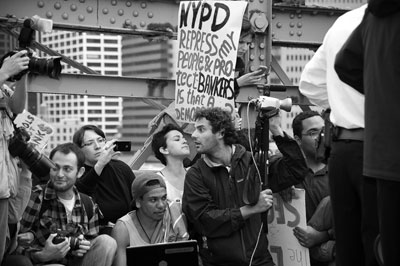 The revolutions and revolts that swept the world in 2011 took almost everyone by surprise. One of the first strong attempts to explain why they happened is Paul Mason’s ‘Why It’s Kicking Off Everywhere.’ He argues that “the materialist explanation for 2011...is as much about individuals versus hierarchies as it is about rich against poor.” By far the most provocative element of his book is the idea that communications technology, in particular the internet, is transforming the way people behave and that a significant contribution to the revolts of 2011 lie in these changes. If he’s right it had profound consequences for the form and structure of revolutionary organisations including anarchist ones.
This article also availale on audio & video, see end.

Paul Bowman gives a 40 minute presentation on the Euro as a moment of the internationalisation of capital and looks for a way of dealing with the crisis that goes beyond the alternative models of capital being argued for by the left. If the height of a crisis is not the moment to raise a discussion of an anti-capitalist alternative then when is? Beyond this he also warns against the stagest approach much of the left has adopted where the economic crisis is to be addressed first by a demand for growth and the environmental crisis ignored till later.
.jpg) It was as if our streets were paved in gold as the Olympic torch made its way across this bright new shiny Northern Ireland. We listened to our local business leaders and political class lining up to praise this symbol of hope and reconciliation, but beneath this spectacle of spin and ‘regeneration’ smokescreen is a showcase of corporate class privilege and profiteering.
It was as if our streets were paved in gold as the Olympic torch made its way across this bright new shiny Northern Ireland. We listened to our local business leaders and political class lining up to praise this symbol of hope and reconciliation, but beneath this spectacle of spin and ‘regeneration’ smokescreen is a showcase of corporate class privilege and profiteering.
 Workers’ co-operatives have always been championed by sections of the left and wider labour movement - from their advocacy by 19th century Welsh social reformer and utopian socialist Robert Owens to Proudhon through to their existence in various state capitalist countries today such as Cuba. While workers’ co-operatives can provide a small example of anarchist ideas based on self-management, direct democracy and mutual aid in action, we should not be blinded by their contradictions and should query their effectiveness as a strategy for real revolutionary transformation.