

Over 30 years of anarchist writing from Ireland listed under hundreds of topics
The ARN Public Journal Launch is this Thursday May 2nd at Trinity College Dublin Sociology Department College Green, 5-7 pm. The event will be held at Department of Sociology Trinity College Dublin 3 College Green Dublin 2. (Please note that this is not at the large campus, but on Dame Street between Starbucks and Costa)
This Saturday May 4th at 3pm, Solidarity Books will be proud to host a free workshop for folk of all ages – children, musicians, educators and other humans – on making musical instruments from recycled materials, understanding sound, tools and improvisation practices AND a live performance at 5pm...
 300,000 public service workers may shortly be forced to strike, something that may very well transform the potential for radical politics in Ireland. The purpose of this Open Letter is to provide information for activists who are not working in Public Services in order to explain the importance of the No vote to Croke Park. It is important in terms of the general struggle against austerity and we want to suggest some ways you can help make sure this fight is won, in particular by coming to a discussion of just that on Wednesday 8th May at 7.30 in the Teachers Club. (RSVP on Facebook)
Join us in Solidarity Books on Wed. May 8th 9pm for a showing of GasLand (2010) 107 mins. Dir. Josh Fox
Film description follows :

Thursday Toddlers Group in Solidarity Books! – This Thursday and every Thursday from 10am to 1pm
Thursday Toddlers Group in Solidarity Books!
 Earlier this year two Irish anarchists delivered talk at Jura books in Sydney regarding the history of anarchism in Ireland, the politics of the WSM and how it organises. The speakers also referred to its ongoing involvement in campaigns and struggles from shell to sea, anti-war activity and involvement in the CAHWT.
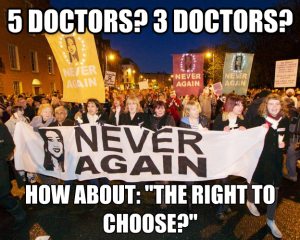 The WSM has always argued that the X-Case legislation was not enough but even so we were shocked to finally see the details of the bill Fine Gael and Labour are preparing. We expected it to be a small but almost insignificant step foward. Instead there is a clear danger that women with unwanted pregnancies will be worse off than before if the final bill resembles what has been presented so far.
 Back before many people had discovered the internet a small group of anarchists including this writer began work on the Anarchist FAQ. We were tired of having to provide the same basic explanations over and over as new people joined the news net group, alt.soc.anarchism, so we began the FAQ so newcomers could be referred to it.
This is a glimpse into a process of investigation into ourselves and each other. It’s neither the beginning nor the end and so it’s open to change. It’s never static. For now, at least, it’s the culmination of a year of conversations around what it might look like to be part of a movement that cultivates an environment of collective and self-care, support, revolutionary love and self-determination. The opinions that will follow are my own but i will use the word ‘we’ throughout this piece to reflect that these ideas were inspired by others and created through conversation and dialogue. I take responsibility for them but am open to suggestions and the possibility that they will change where better versions replace them.
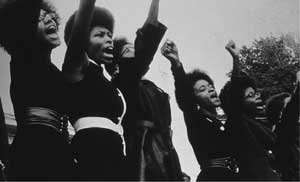 As class-struggle anarchists dealing with the relations between gender, race and class, we must, in theory and practice, pick a path between two pitfalls. On one side is economic reductionism – the reduction of all political questions to the social relations of production – which erases the perspectives and struggles of women, queers and people of colour; submerges their voices within an overly generalised class narrative, in which the idealised Worker is implicitly white heterosexual and male; or consigns their struggles to a secondary importance compared to the “real struggle” of (economic) class against class. On the other is a stultifying and inward-looking liberal-idealist identity politics, concerned fetishistically with the identification of privilege and the self-regulation of individual oppressive behaviour to the (near) exclusion of organised struggle, which, while amplifying the voices of the marginalised, consigns them to an echo chamber where they can resonate harmlessly.