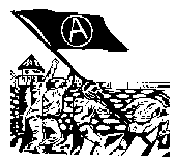
Why the Black flag?
The black flag is the symbol of anarchism. It evokes reactions
ranging from horror to delight. Find out what it means and prepare to
see it at more and more public gatherings. Why is our flag black?
Black is a shade of rejection. The black flag is the rejection of all
flags. It is a rejection of nationhood which puts the human race
against itself and denies the unity of all humankind. Black is the
mood of anger and outrage at all the hideous crimes against humanity
done in the name of allegiance to one state or another. It is anger
and outrage at the insult to human intelligence implied in the
pretences, hypocrisies and cheap tricks of governments... Black is
also a colour of mourning, the black flag which cancels out the
nation also mourns it's victims - the countless millions murdered in
wars, external and internal, to the greater glory and stability of
some bloody state. It mourns for those who's labour is robbed (taxed)
to pay for the slaughter and oppression of other human beings. It
mourns not only the death of the body but the crippling of the spirit
under authoritarian and hierarchical systems; it mourns the millions
of brain cells blacked out with never a chance to light up the world.
It is a colour of inconsolable grief...
But black is also beautiful. It is a colour of determination, of
resolve, of strength, a colour by which all others are clarified and
defined. Black is the mysterious surrounding of germination, of
fertility, the breeding ground which always evolves, renews,
refreshes, and reproduces itself in darkness. The seed hidden in the
earth, the strange journey of the sperm, the secret growth of the
embryo in the womb - all these the blackness surrounds and protects.
So black is rejection, is anger, is outrage, is mourning, is
beauty, is hope, is the fostering and sheltering of new forms of life
and relationships on and with this earth. The black flag means all
these things. We are proud to carry it, sorry we have to, and look
forward to the day when such a symbol will no longer be necessary.
This page is part of the
Revolt collection